

How does the lead in the US air-conditioning industry break the South-East Asian and South American market?
Project background
As a world-renowned home appliance company, Midea plans to further explore the Southeast Asian and South American markets, especially Malaysia and Brazil, two regions with high growth potential. However, in the process of expansion, we facedCore pain.: for the dual marketRegional characteristics(e.g. climate, living environment),Consumer demand(e.g. preference for energy efficiency or intelligent function)Channel structure(overline and offline and mainstream platforms)Competition patternsLack of systematic awareness (head brand outlets and user feedback) makes it difficult to develop precise product positioning, channel layout and competitive strategies, and there is an urgent need for professional market research support.
Phase I: global market information combing
To decipher the information-blind zone, the team conducted a full-scale scan of the Malaysian and Brazilian markets through desktop research to build a basic cognitive system:
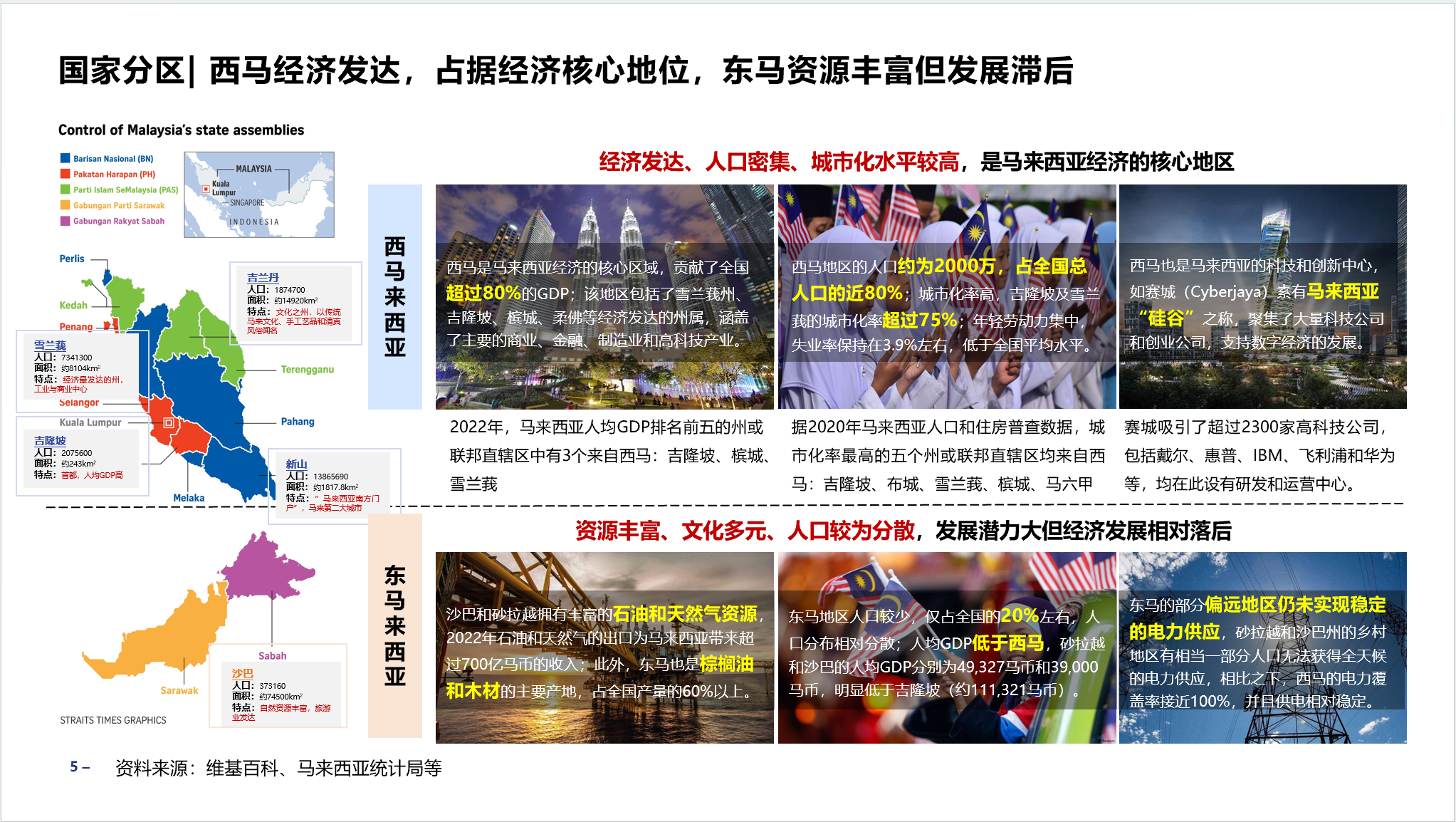
- Regional characteristics: Covers national divisions (such as the economic core of West Malaysia, resource-rich East Malaysia, and economically developed southeastern Brazil), climate environment (high temperature and high humidity drive demand for air conditioning), living environment (house type, area and air conditioning installation requirements), etc.;
- Consumer demand: Analyze the population structure (high proportion of young people), economic level (per capita GDP and home appliance consumption capacity), consumption philosophy (Western Malaysia focuses on quality, East Malaysia focuses on cost-effectiveness; southern Brazil prefers installment) and policy impact (such as Malaysian energy-saving subsidies, Brazilian energy efficiency standard transition period);
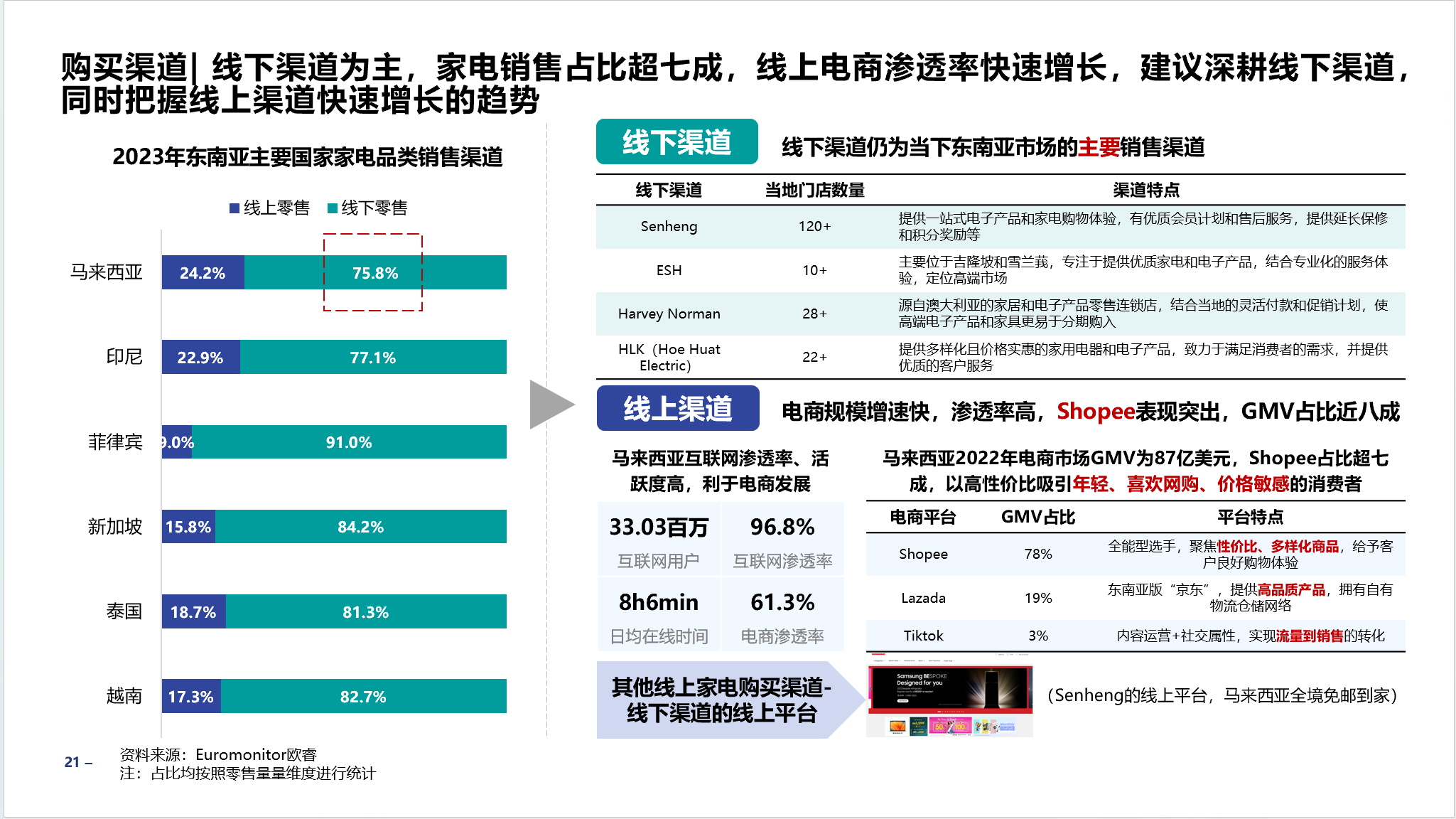
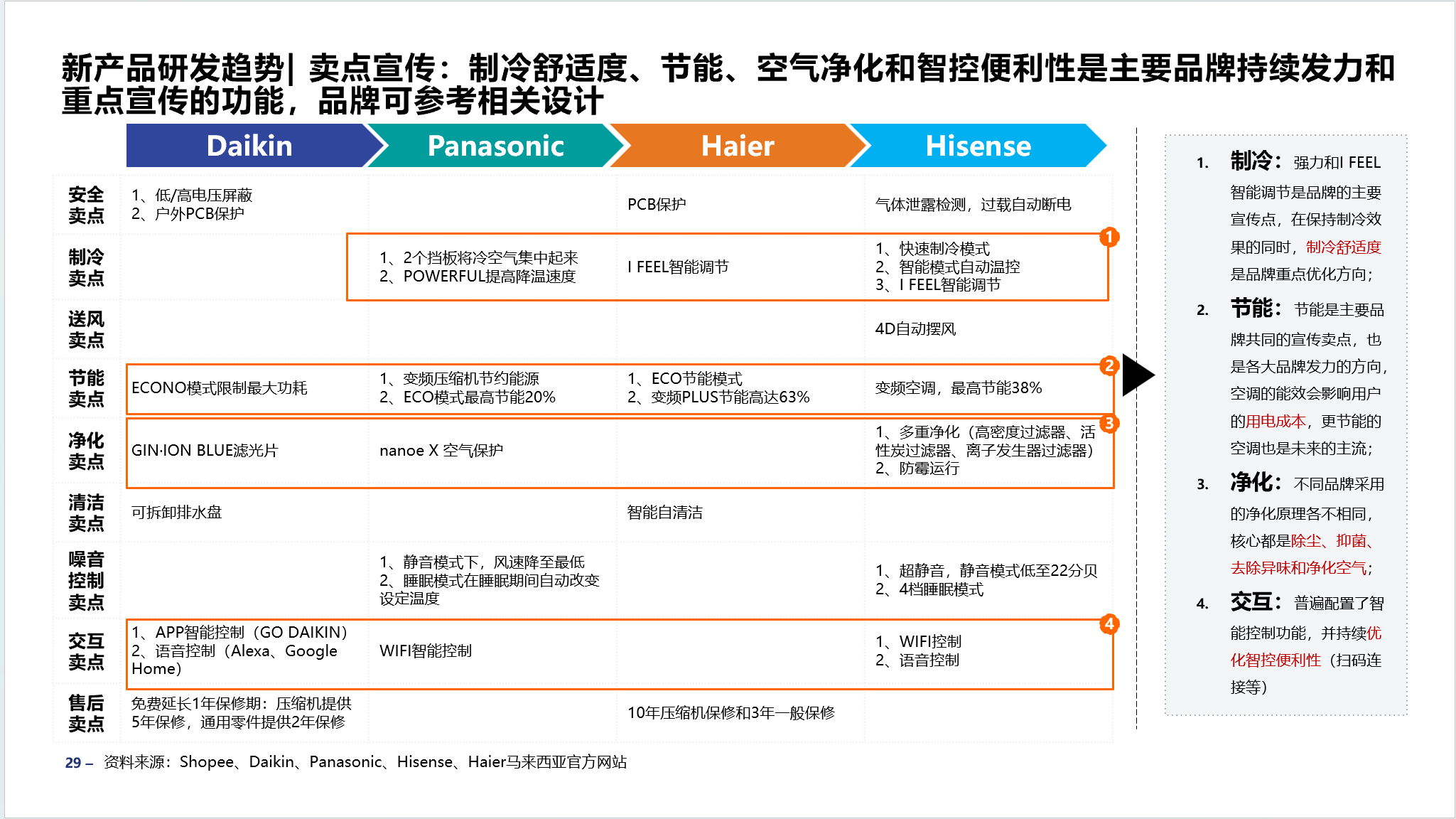
- Channels and competition: Sort out the mainstream sales channels (Malaysia accounts for more than 70% offline, Brazil relies on home appliance chains), the market share of leading brands and core selling points (such as Daikin’s purification function, LG’s intelligent control), and user feedback pain points (poor installation service, loud outdoor machine noise, etc.).
Phase II: Strategic direction framework output
Based on the findings of the study, a targeted strategy framework for the United States is provided:
- Product positioning: Combining the climate of the two places (high humidity requires intensive dehumidification), energy efficiency policies (mainly promoting 4-5 star energy-saving products) and user preferences (younger groups favor intelligent interaction), optimize the function combination (such as purification + intelligent control + energy saving);
- Channel Layout: Malaysia is deeply involved in offline chains (such as Senheng) and has deployed e-commerce companies such as Shopee; Brazil relies on home appliance chains (such as Ponto Frio) and localized production bases (Manaus Free Trade Zone) to reduce costs;
- Competition responses• Strengthening of the delivery of one-size-fits-all services for competitive set-up services; highlighting of differential selling points (e.g., corrosive design for coastal areas of Brazil) and enhancement of user experience.
Through systematic market research, it helps to master both local market patterns with precision and provides a basis for decision-making on their product overlay and market expansion.
