
How does a beautiful blender get into a small power market in Southeast Asia?
Project background
As a leading company in the home appliance industry, Midea plans to expand the mixer market in Southeast Asia, but it faces the pain point of insufficient knowledge of the local market: lack of understanding of the core markets in Southeast Asia (Malaysia, Indonesia, Vietnam)Systematic understanding of consumption characteristics, product demand, channel characteristics and patterns of competition, making it difficult to accurately formulate product strategies and market entry plans. In order to solve this problem, Midea entrusted our company to conduct desktop research on the Southeast Asian mixer market, aiming to provide a basis for decision-making by comprehensively scanning the market.
Phase 1: Multi-dimensional market insight, deciphering the bottom logic of consumption
Three-scan, using the "macro-middle-micro" three-scan approach, cutting into market fundamentals, penetrating consumption habits and use scenarios.
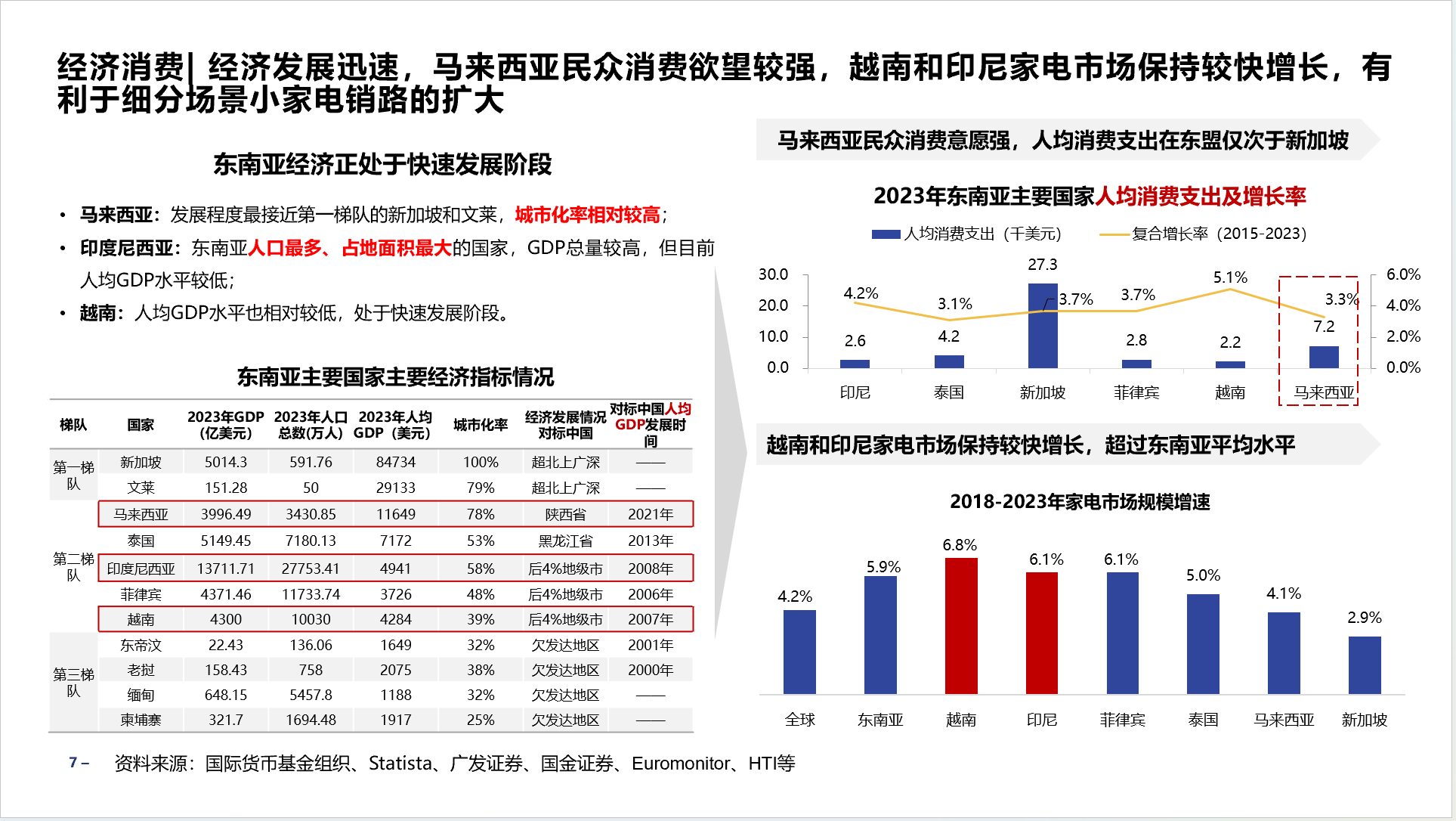
- Macro level: Analyze the target country’s demographic structure (younger people, smaller family sizes), economic consumption (Malaysia has a strong willingness to consume, Indonesia and Vietnam’s home appliance markets are growing rapidly), living conditions (per capita living area is small, preference for compact products) and export policies (tariff preferences are conducive to product exports), and build market fundamentals.
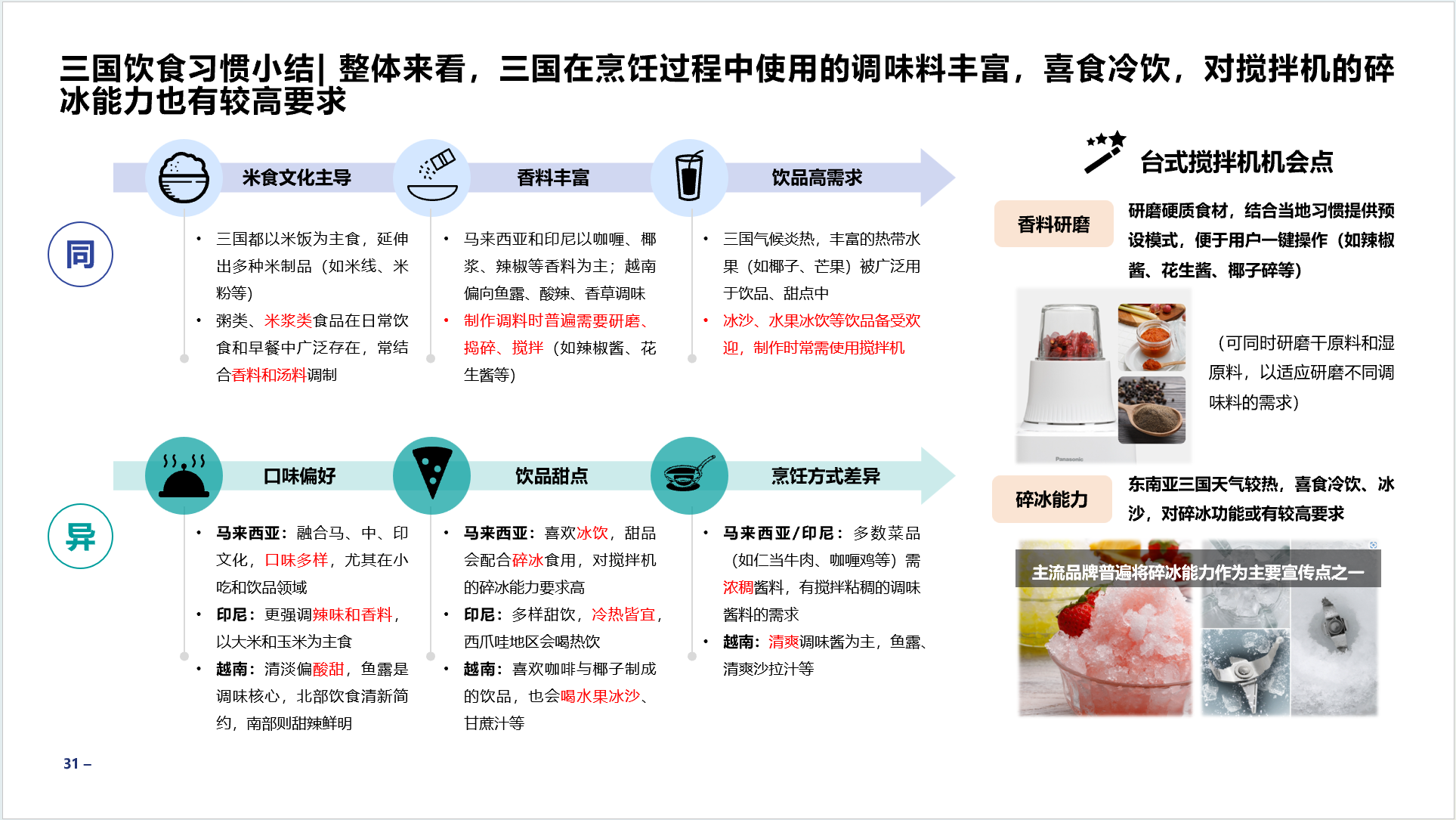
- Medium-level: Focusing on the differences in eating habits, such as Malaysia's preference for rich and spicy sauces, Indonesia's preference for spicy spices and sweet dishes, and Vietnam's preference for hot and sour flavors, the three countries' core needs for blenders for "crushing ice, grinding sauces, and blending smoothies" were extracted.
- Microlevel: Sort out the channel characteristics and make it clear that offline is still the main channel (such as Malaysia’s modern channels dominate, Indonesia’s traditional and e-commerce are balanced), but the online growth rate is significant (Shopee, Lazada and other platforms have outstanding performance), providing direction for channel layout.
Phase II: Product and competition depth profile, anchoring opportunities for differentiation
Focus on product power panels and market gaps through a three-dimensional analysis of "Regional competition function dismantling + user pain mapping + localizing demand matching".
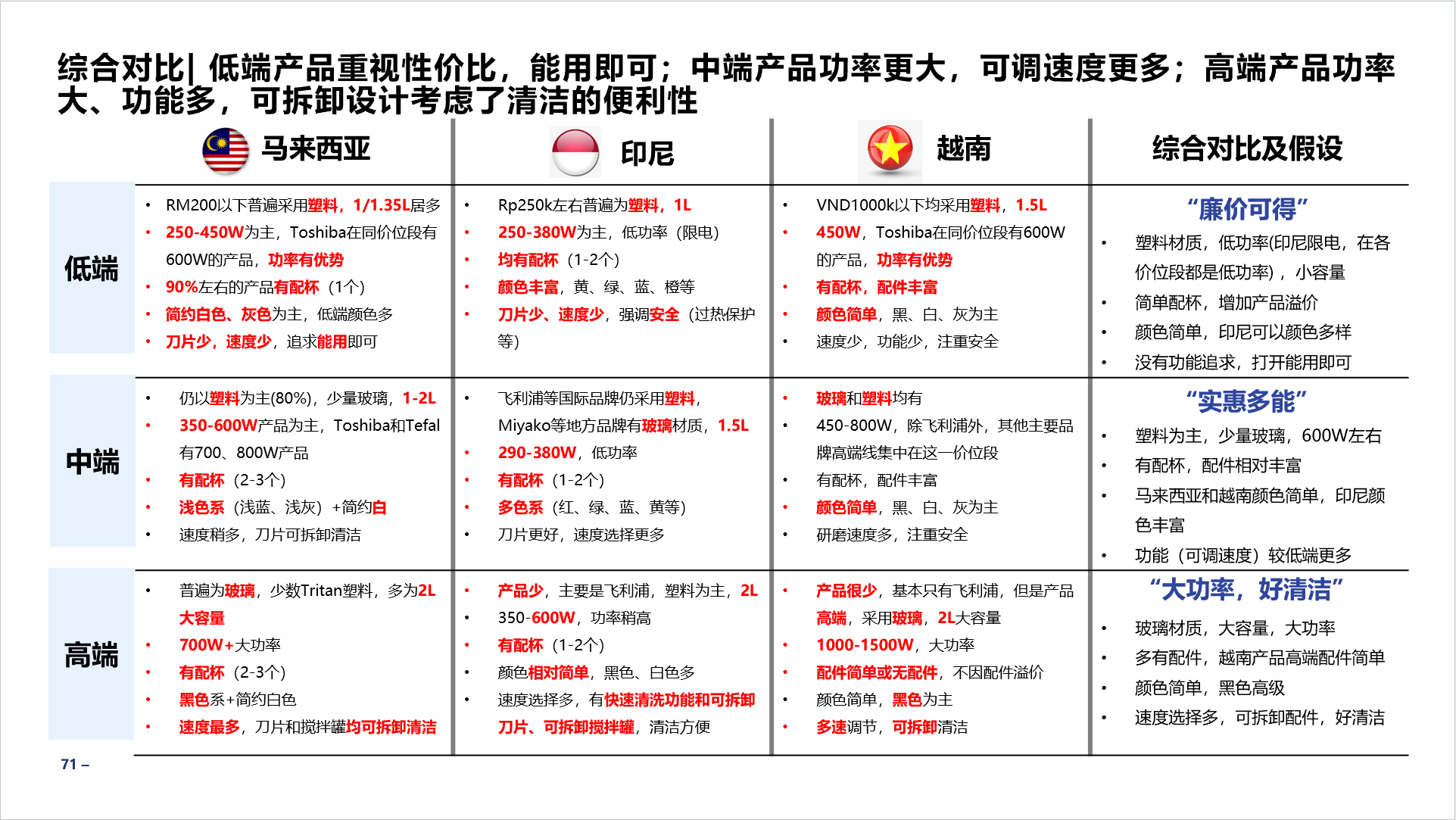
- Competition functional stratification:Dismantling mainstream brands (such as Philips and Panasonic in Malaysia, Miyako in Indonesia, and Bluestone in Vietnam) by price range, it was found that high-end products have high power, multiple accessories, and smart programs as their core selling points, while mid- and low-end products (such as Pensonic and Cosmos) compete with basic mixing functions and low prices. However, there are common problems such as "power and scene mismatch" (such as excessive power of some products in Indonesia's power-limited environment) and "insufficient versatility of accessories."
- User pain depth dig:Combining e-commerce reviews and scene analysis, we extracted three core pain points - functional level (uneven stirring, low ice crushing efficiency, especially when making tropical fruit smoothies, easy jamming), experience level (cleaning is cumbersome, and sauce can easily remain in the gap between the blade and the jar body), and durability level (the motor is easy to overheat, and the poor fit of accessories leads to leakage).
- Localized needs adaptation recommendations:Based on insights, targeted directions are proposed, such as designing a 1-1.5L compact body for small kitchen scenarios in Southeast Asia; strengthening the dual modes of ice crushing and sauce grinding (adapting to the production needs of Malaysian chili sauce and Indonesian peanut butter); optimizing the sealing structure and detachable blades, and adjusting motor parameters in conjunction with regional policies to balance performance and compliance.