
How to unlock new opportunities for consumption in Europe, South-East Asia, and Latin America.
Project background
As the world's leading brand in the field of smart wearables, Xiaomi, together with Huawei and imoo, accounts for over 60% of the children's smartwatch market. It also has a solid foundation in the adult market, but it faces growth pain points. The regional demand for the global smart watch market is fragmented. For example, Mexico focuses on mobile phone linkage, Germany focuses on health monitoring, and Southeast Asia focuses on sports adaptation. It is difficult for Xiaomi's existing products to fully cover it; the squeeze between leading brands and segmented brands has intensified, and the pressure of differentiated competition is high; technologies such as health monitoring and operating systems are iterating quickly, and it is necessary to accurately grasp trends. To this end, our company adopts a three-dimensional research system of macro trends, regional micro, and competitive product benchmarking to provide decision-making support for Xiaomi from different dimensions.
Phase 1: Multi-dimensional market research, in-depth analysis of the market situation
To address the market insinuation challenges faced by milli, the project team used the “macro and micro” “commonity and personality” approach to research and to conduct a full range of market research.
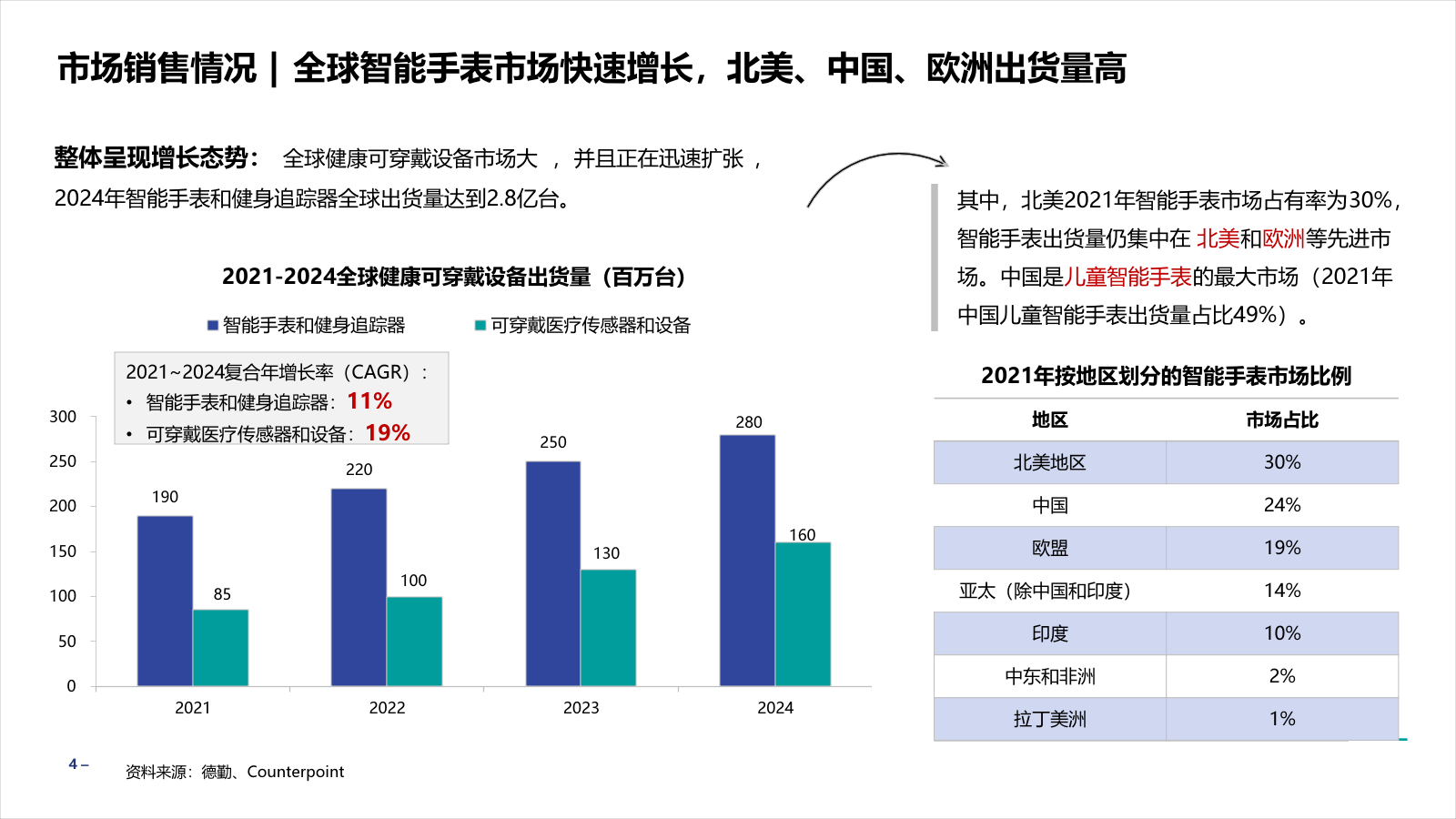
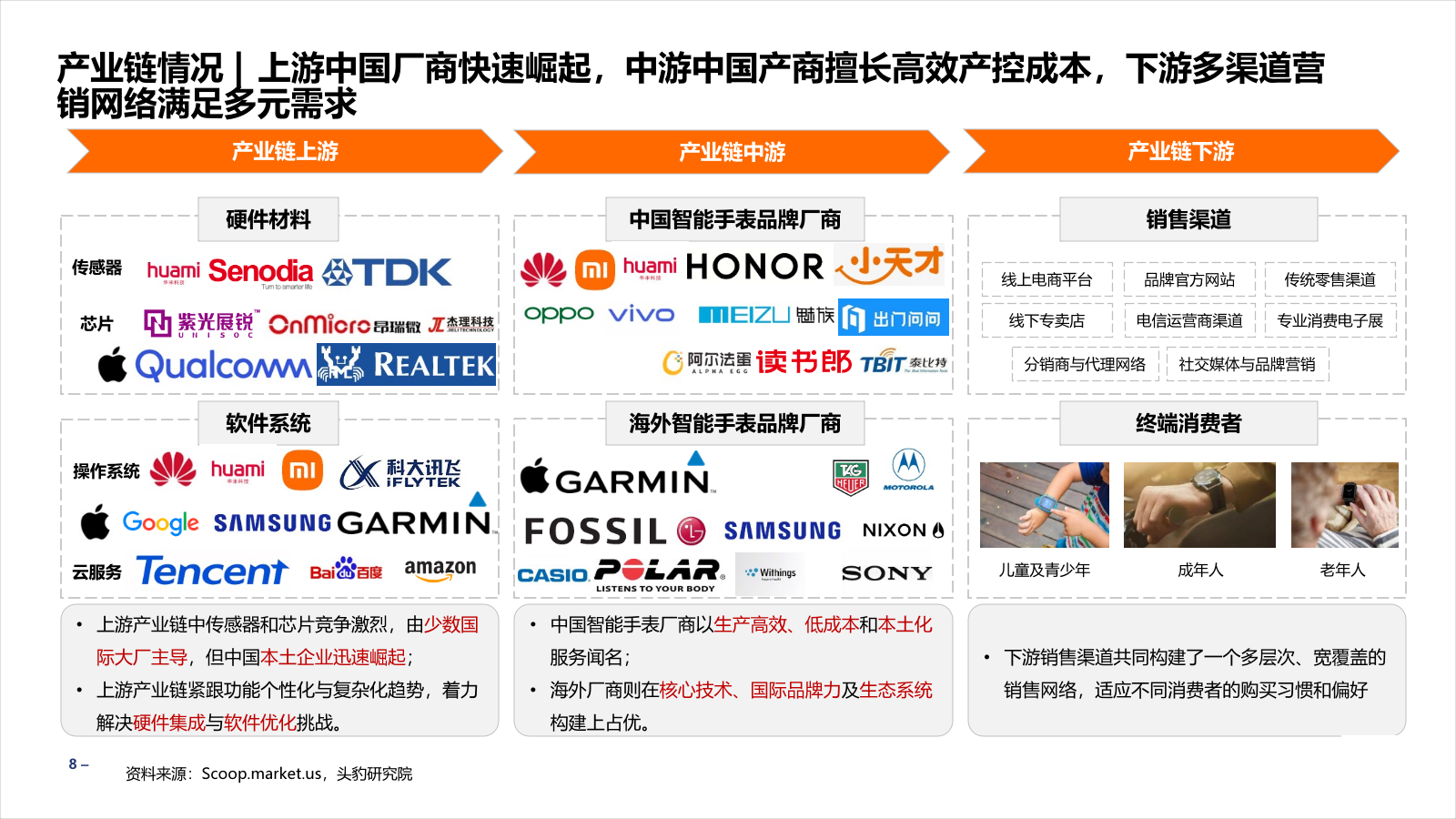
- Macro level, focusing on global smart watch market trends, analyzed from five dimensions: sales, category differences, brand layout, operating system development, and industrial chain structure. By integrating data from authoritative organizations such as Deloitte, Counterpoint, and Statista, we sorted out the changes in global smartwatch and related wearable device shipments from 2021 to 2024, and clarified the size and growth advantages of smartwatches; analyzed the market share changes of major brands such as Apple, Samsung, and Huawei (2020-2022 data), and grasped the industry competition pattern; studied Hongmeng OS, watch OS, and Wear OS Wait for the market performance of operating systems in different regions to grasp system development trends; dismantle the upstream (sensors, chips), midstream (brand manufacturers), and downstream (sales channels) of the industry chain to understand the industrial ecology.
- Microlevel, focusing on the three key target markets of Mexico, Germany, and Malaysia, conducted in-depth research from the four dimensions of human geography, economic society, lifestyle, and smart watch usage scenarios. For example, we analyzed Mexico’s consumption habits influenced by American culture and trade, Germany’s digital health needs in the context of “Industry 4.0”, and Malaysia’s multi-ethnic culture and sports health needs in a tropical climate to accurately locate the core pain points and potential needs of users in each region.
Phase 2: Focus on core needs and provide targeted strategic support
Based on the findings of Phase I, the project team built the solution framework around product positioning and market layout to provide decision support for millet.
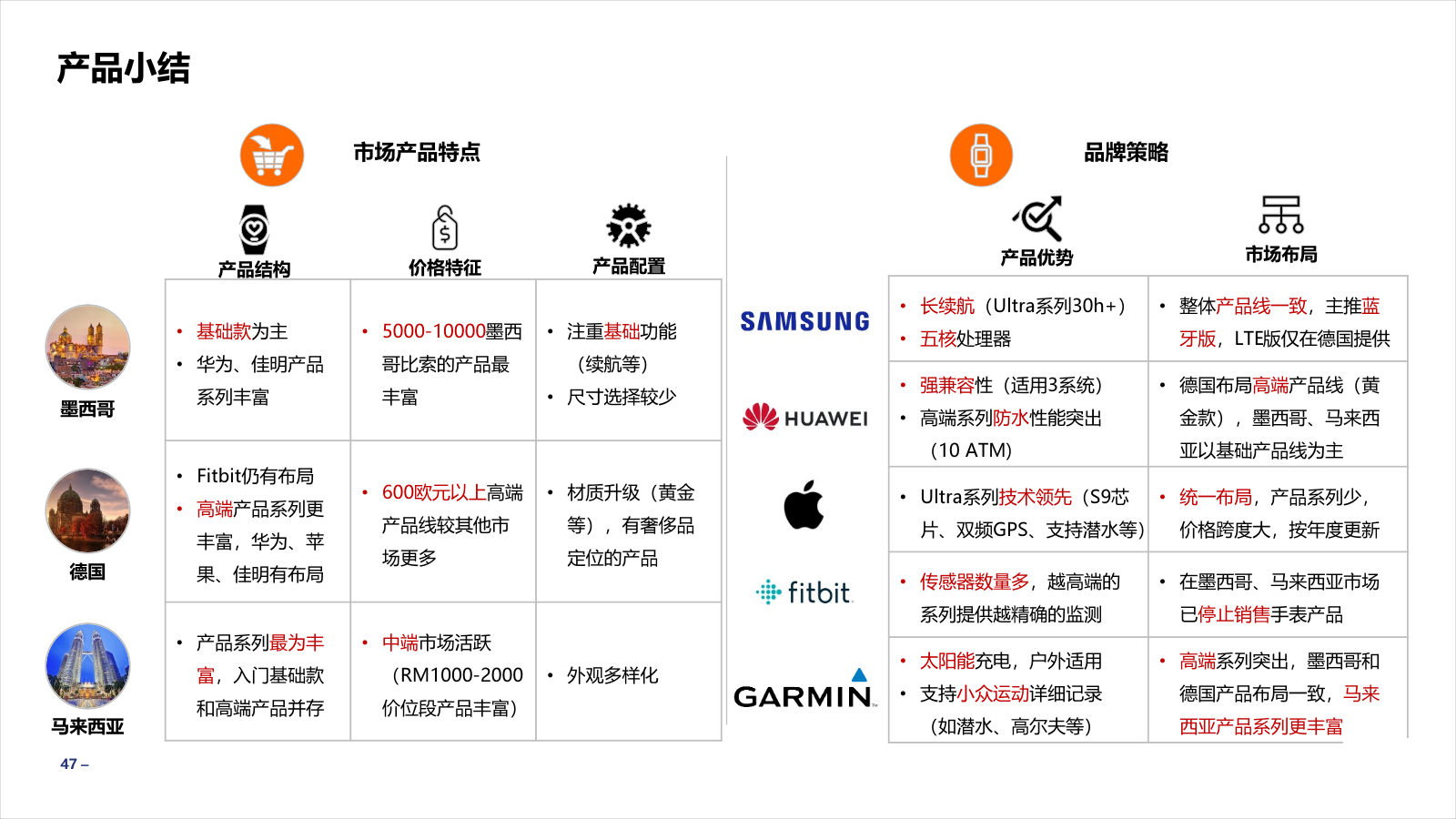
- In terms of product strategy, combined with user needs and competition patterns in each region, put forward product function and matrix optimization suggestions. For the Mexican market, it is recommended to focus on basic products and strengthen functions linked to mobile phones (such as calls and message synchronization) to match the core needs of local users; for the German market, high-end product lines can be deployed to highlight health monitoring (blood pressure, sleep) and exercise monitoring functions, in line with local users' high acceptance of digital health management; for the Malaysian market, launch products suitable for evening sports and water sports (diving, surfing), and add health monitoring (blood sugar, sleep) related functions to deal with local obesity and "three highs" problems.
- Market layout, referring to the regional layout characteristics of each brand (such as Huawei's high-end gold models in Germany and a richer product series in Malaysia), it is recommended that Xiaomi adjust product price bands and channel layout according to the consumption power and demand differences in different markets, such as focusing on the mid-range market of MXN 5,000-10,000 MXN in Mexico, expanding the high-end market of more than 600 euros in Germany, and taking care of both in Malaysia. RM1000-2000 mid-range market and entry-level and high-end markets, while utilizing multi-channel networks such as online e-commerce platforms, offline stores, and telecom operator channels to increase product market coverage.