
How does the Cadrere des Fuersian project work?
Background of the project
Cade Lefors hopes to align the project by mapping consumer demand in the surrounding population, and to upgrade it to visitor flow and in-situ consumption conversion. For this reason, the case is passed.Big data scanning, quantitative questionnaires, qualitative in-depth visits, etc., conduct research around the three core issues of "customer group characteristics in the circle", "current performance of the project" and "customer group consumption needs and evaluation", and finally output suggestions for positioning calibration, passenger flow improvement and consumption conversion.
Project proposals (parts)
1) Client analysis
This phase focuses on the total number and characteristics of the customer base within the focal circle, providing the basis for project positioning.
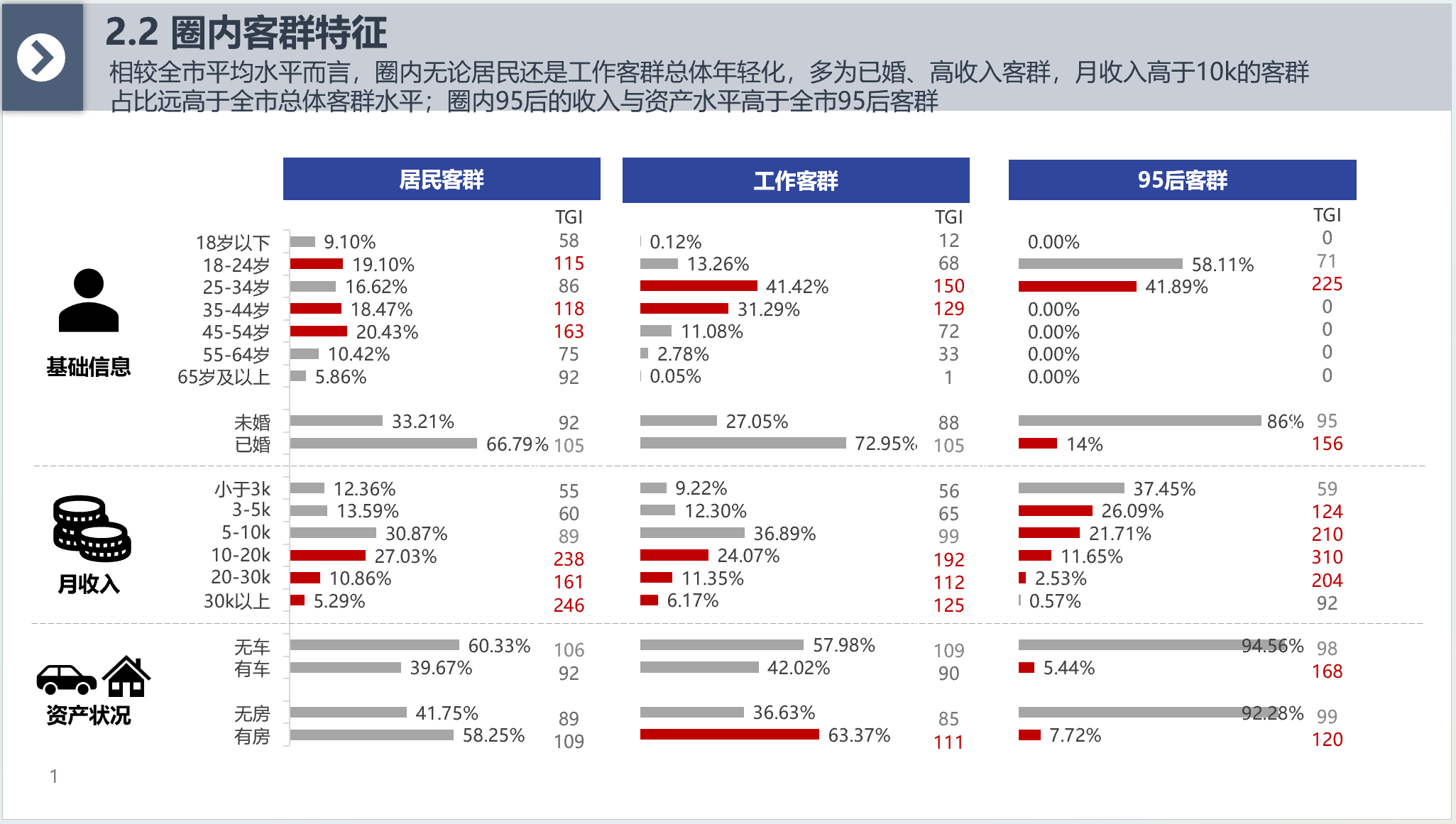
- Host structure: The resident population in the circle is about 1.456 million, mainly working people and residents, with post-95s accounting for 20.5%. The consumption power is divided into "high, medium and low".
- Core pain.
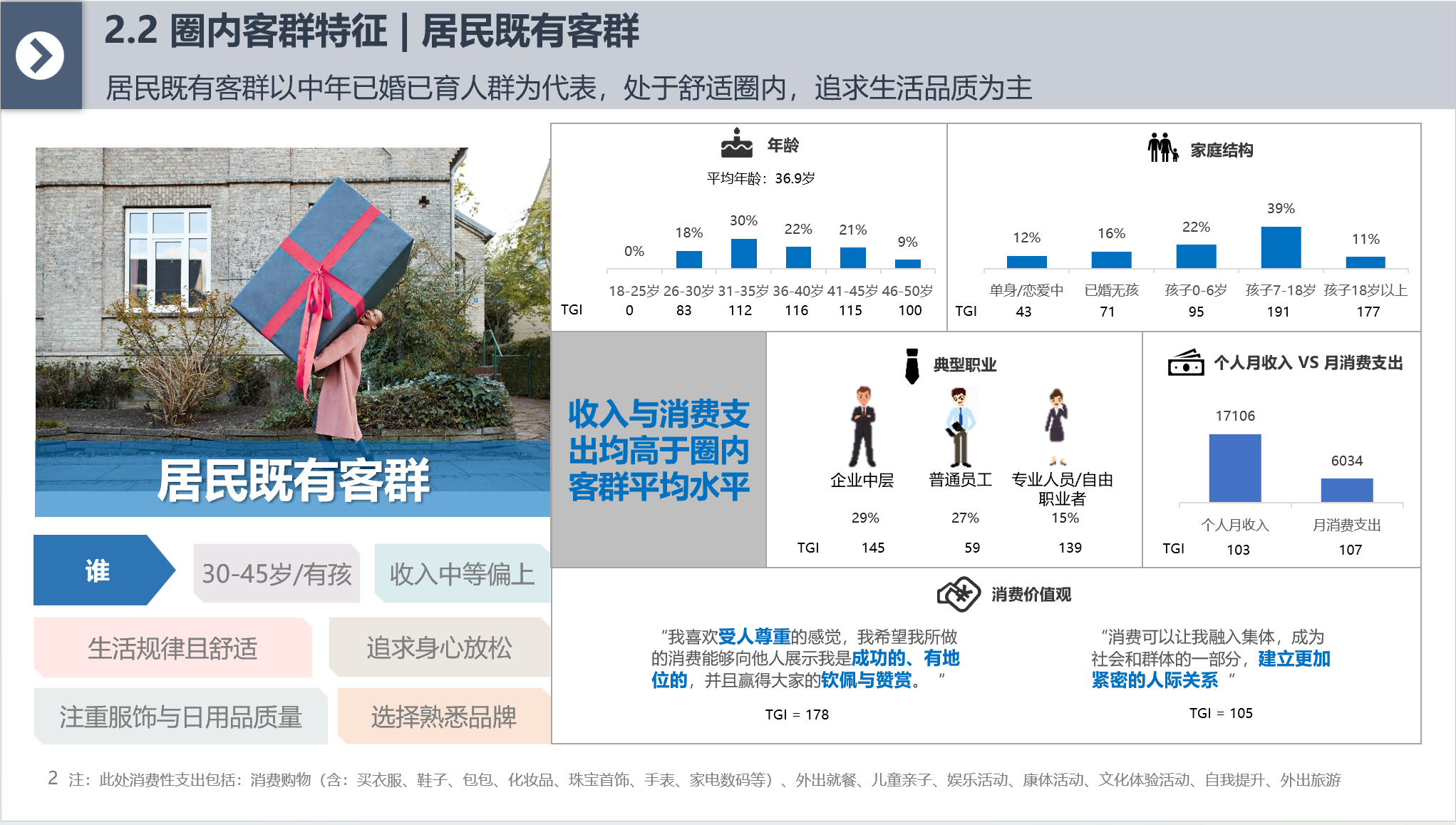
- The population is of high demand for children, children and quality consumption, but the current business situation is difficult to meet.
- Workforce: Focus on easy meals and socialization, but the project lacks a red card spot.
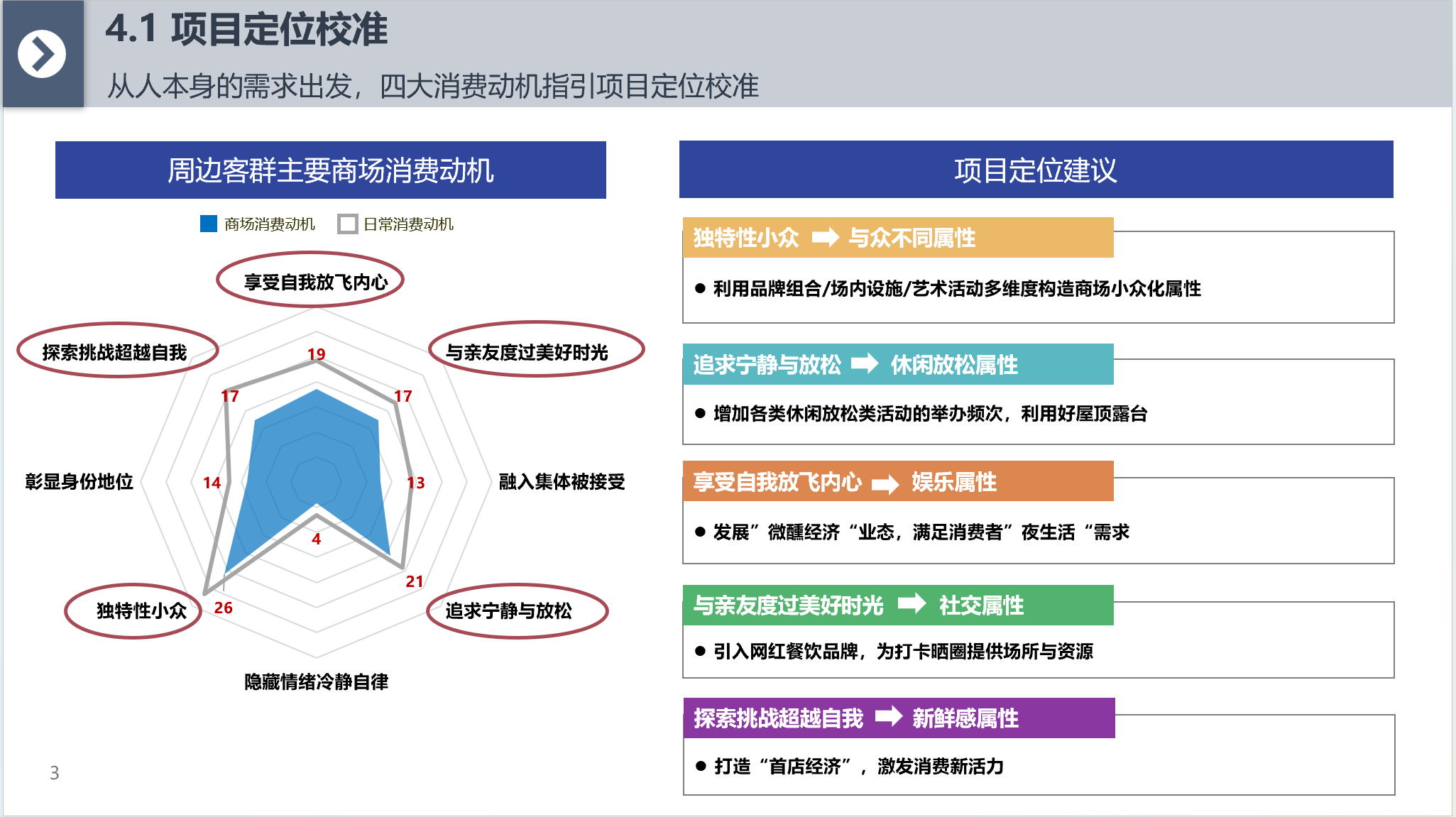
- 95 Posthumous: pursuit of personality, experience and freshness, existing brands are highly homogeneous.
2) Project diagnosis
- Flows of passengers: subway closures have led to a drop in the number of visits by 23.5 per cent and the flow of passengers to competitions such as the shopping centre at the station, the Taguri, etc.
- Business shorts: Businesses like garments, make-up and children are less attractive than competition, lack human brands and distinctive experiences.
- Consumable barriers: low size, insufficient promotional activity and low number of new brands, resulting in inefficient conversion.
- Fuzzy positioning: Same as competition, without the core label of “recreational, social, unique experience”.