

How does a small group of electricity come into the foreign market?
China is a major manufacturing country, and the home appliance industry is one of China's manufacturing banners. During the consumption upgrading stage, Chinese home appliance companies have created many small home appliance categories and gained a certain market share. However, with the gradual changes in the domestic consumption environment and the downturn of the real estate market, the continued growth of the small household appliances category has been restricted. Therefore, overseas markets have become the target of major home appliance brands.
As one of the leading brands of home appliances in China, Haier Smart Home hopes to use the dehumidifier category as an entry point to gain insights into user needs in major overseas markets such as Europe (Italy), Southeast Asia (Indonesia), and East Asia (Taiwan, China), and find a path to product improvement that meets the needs of local users. Although the company also has a certain degree of understanding of the current situation of the target overseas market, it lacks support from the perspective of user research. Through this project, we solved this core pain point for brands.
01 Building framework awareness of target overseas markets through desk research, expert interviews
In the design phase of the study, we suggest that clients first establish a preliminary understanding of the target market through desk research and expert interviews.Core causesThere are two reasons: 1) It lays the direction for verification and excavation for subsequent qualitative and quantitative user research, reducing the pressure in the qualitative and quantitative research stages; and 2) The existing data is an intuitive reflection of objective facts such as local economic development, market development, and humanistic features, and there is no need to rely on qualitative or quantitative user research.
Through desk research, we helped the brand organize the macro outline of typical markets such as Italy, Indonesia, and Taiwan, including natural environment, industrial structure, human environment, living environment, etc., and discussed their possible impact on the local development of the dehumidifier category from a background level. For example, Indonesia has abundant rainfall overall, high humidity, and a large population base, which are favorable factors for the development of the dehumidifier category. But at the same time, there is a large gap between urban and rural areas in Indonesia, the average income level is not high, and the diversity of home appliance consumption scenarios needs to be improved, which will constrain the development of the dehumidifier category.
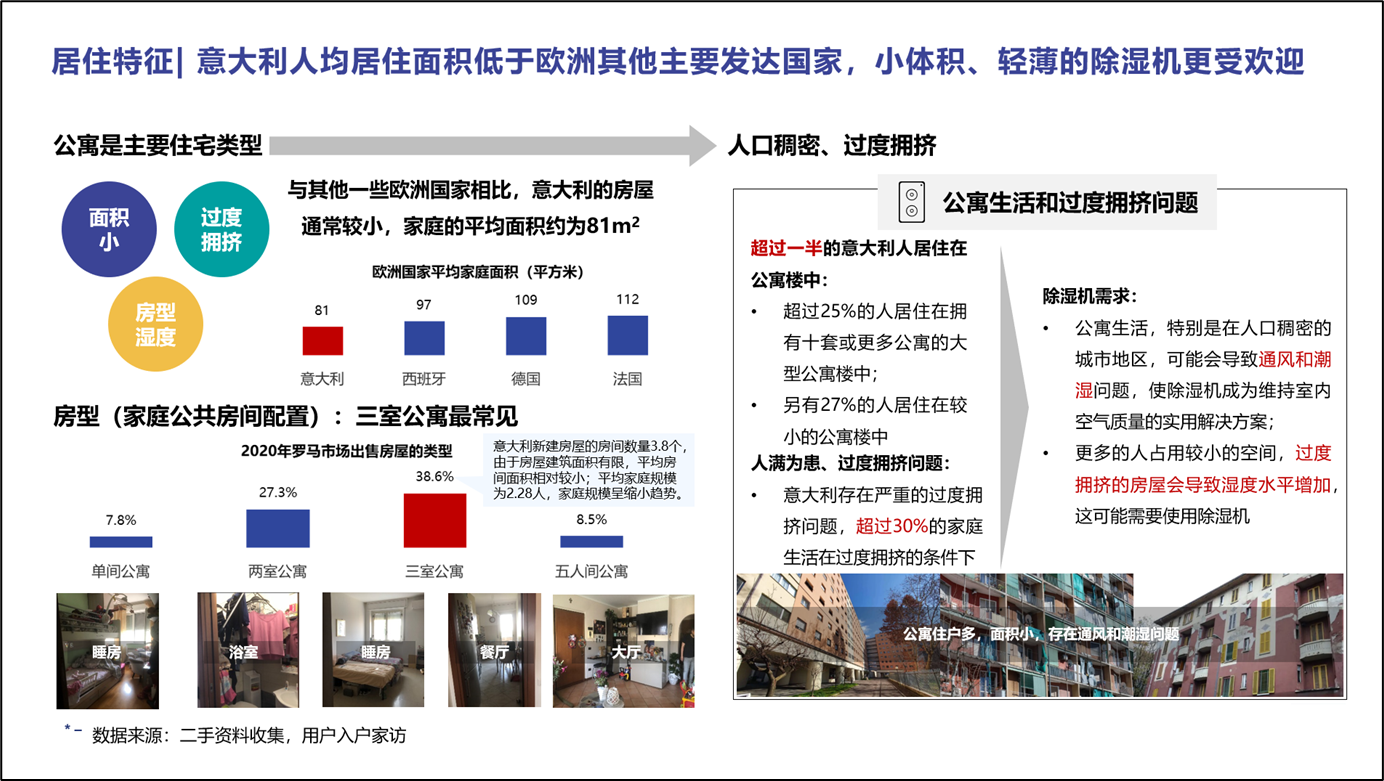
(Italian living environment)
On the other hand, through the perspective of internal experts of core competitive products and supply chain experts in the local market, we understand important information such as the scale of the local market, product types, technical routes, emission standards, and basic user habits, and sort out the content that needs to be verified and explored in the user-side research stage.
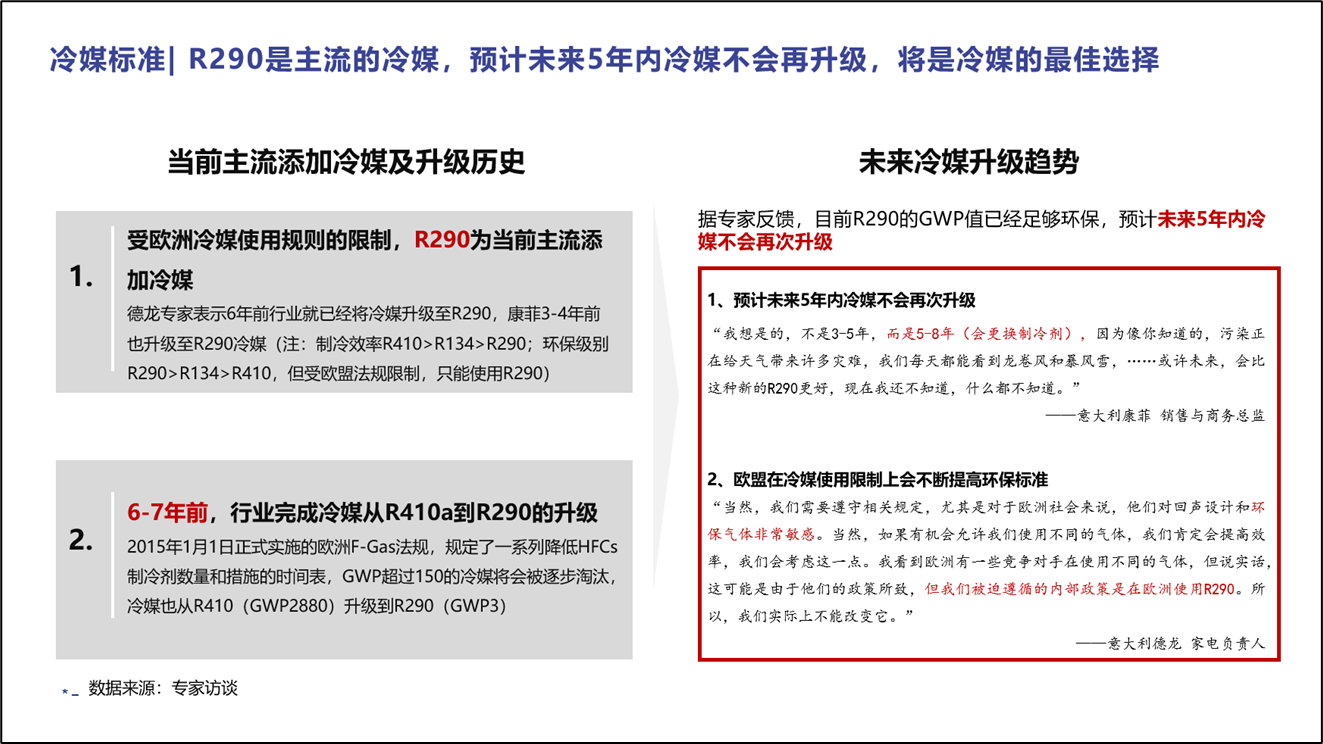
(Vision of the Italian refrigerant route)
In summary, desk research, expert interviews are necessary for cruise research to help us build a framework understanding of unfamiliar markets and thus refine subsequent user research.
02 It's only possible to get out of the walls of the unknown market by going into the user's life scene and understanding the user's needs and pain.
In user-side research, we use qualitative research (household interviews) to get into users’ real-life scenarios to understand their home environment, home appliance layout, and dehumidifier usage and habits. We use specific life scenarios to explore the inconveniences users encounter during use and their expected solutions. Taking Italian users as an example, since the western kitchen adopts an open layout, the water vapor generated during cooking will affect the air comfort in the living room, so the living room is one of the places where the dehumidifier is placed.
In the quantitative questionnaire survey, we sent questionnaires to target users in the online community, focusing on quantifying the category penetration rate of the target market, user purchasing decision-making methods, category experience status, marketing preferences and other dimensions.
Product improvement and upgrading are not simply adding or subtracting functions, but require a full understanding of the actual conditions of different markets and finding the starting point from the perspective of user perception and experience. To achieve this, it is necessary to comprehensively use qualitative and quantitative research methods to find user scenarios and stories related to product improvement.
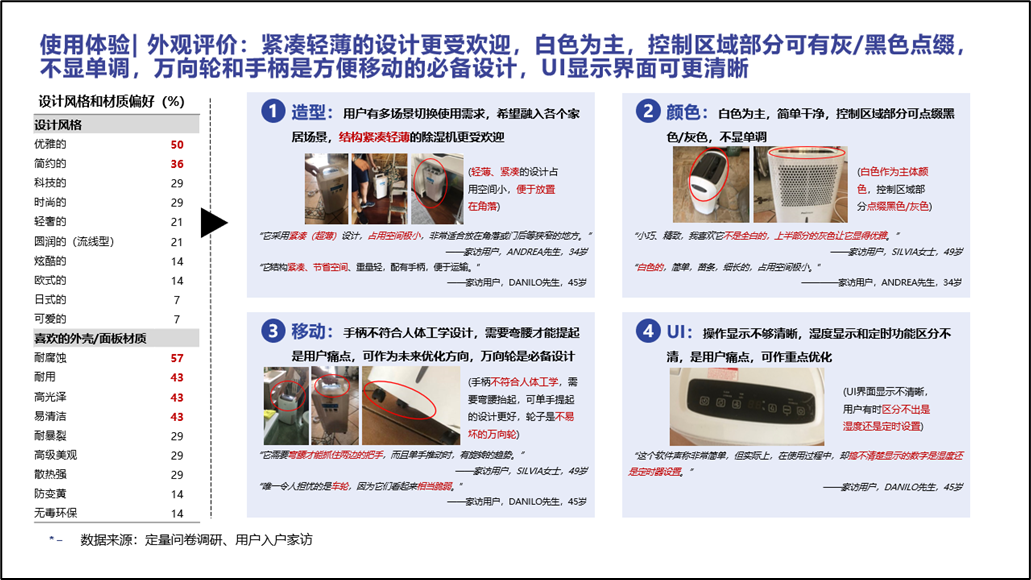
(product experience quantitative study)
03 The "low price" is not the only solution for China.
Due to the long-term inertia of "involution" and the support of huge production capacity, "cheap" has indeed been the label of Chinese brands for a long time. However, things are changing. In this project, we found that users in overseas markets have a gradually increasing positive perception of Chinese brands. For example, Italian users believe that Chinese brand dehumidifiers are more cost-effective than local brands, and they can buy better quality products for less money. We recommend that customers, while building a differentiated product experience, use "quality-price ratio" as the core element of marketing communication to gradually establish the brand's competitive advantage in overseas markets.
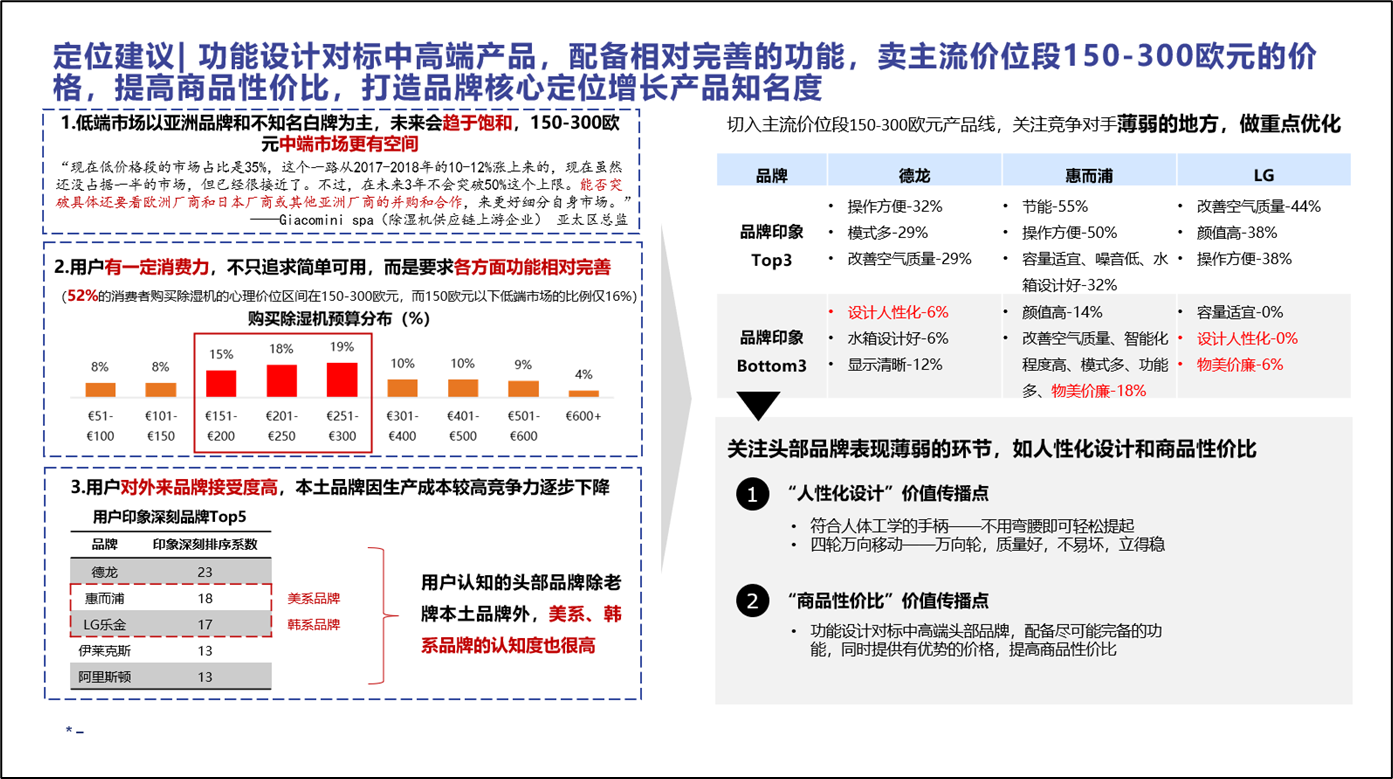
"Italian native white card competition"
