
How does China's "post-development" brand capital improve in real estate?
Project background
In the "post-development era" of real estate, market growth is slowing down, supply is becoming increasingly abundant, and it is gradually moving towards a long-tail market. Brands have become the core element of commercial competition, and developers need to work intensively from the operational and management levels. As a very influential real estate company in South China, Times China's contracted sales in 2019 reached 78.36 billion yuan, ranking 38th in the country, and firmly ranked among the top 10 in developed cities such as Foshan, Zhuhai, and Dongguan. However, it faces two core pain points: First, in the long-tail market, there is a lack of systematic product development. It is difficult to accurately monitor and enhance brand assets using brand asset management tools; secondly, although it has a deep foundation in South China, it is restricted by external factors in various places. There is a gap in brand influence with leading real estate companies, and its performance is uneven in different cities and customer groups. There is an urgent need to clarify the brand positioning and improvement direction.
Phase I: Brand diagnosis and problem dismantling
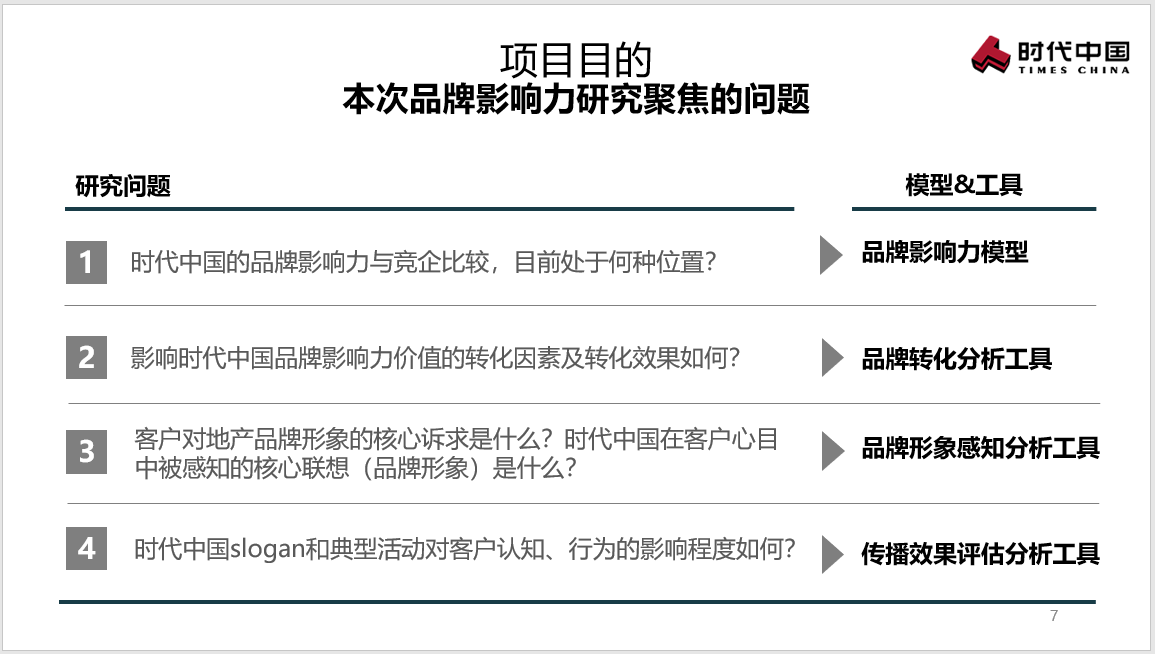
Based on global brand research experience, and using a mature brand assessment tool system, in-depth diagnostics are conducted from four dimensions in response to the core needs of China in the era:
- Brand influence benchmarking: Using the brand influence model, we compared the gap between Times China and leading real estate companies such as Vanke and Country Garden as well as regional competitors. It was clear that Times China is in the second echelon of the industry, with a significant gap in brand influence from the first echelon, and its advantages over the third echelon are not outstanding.
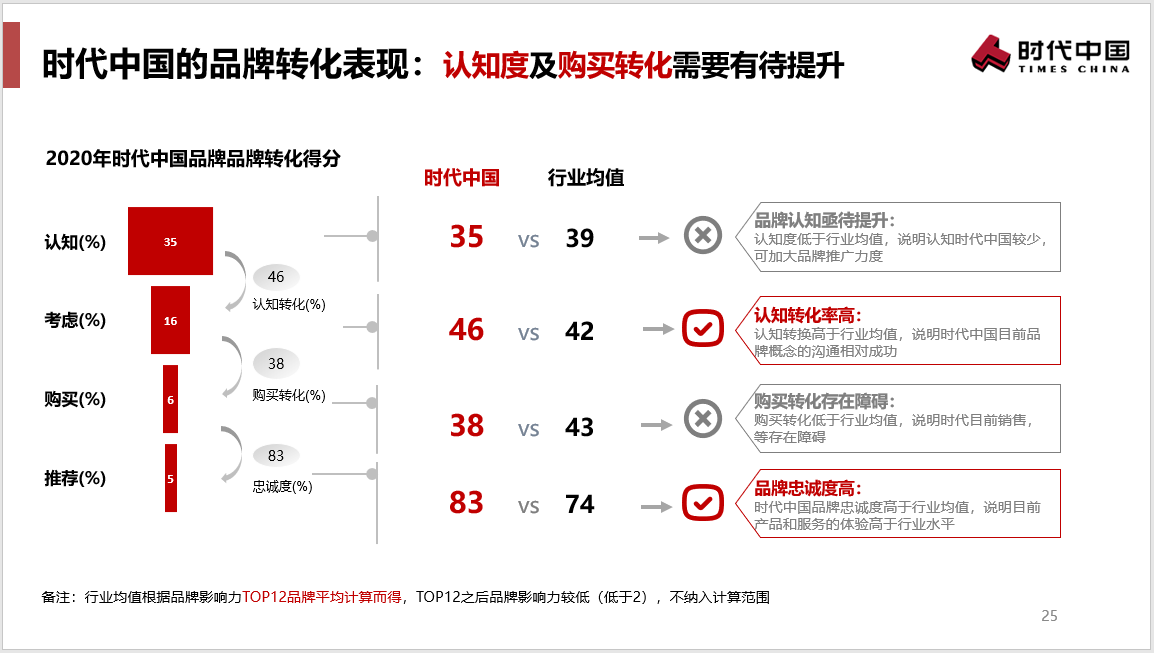
- Brand conversion path analysis: With the help of the brand conversion model, we sorted out the conversion situation of the entire link of awareness-consideration-purchase-recommendation, and found that brand awareness is lower than the industry average, there are obstacles in the purchase conversion link, and customer loyalty performance is good.
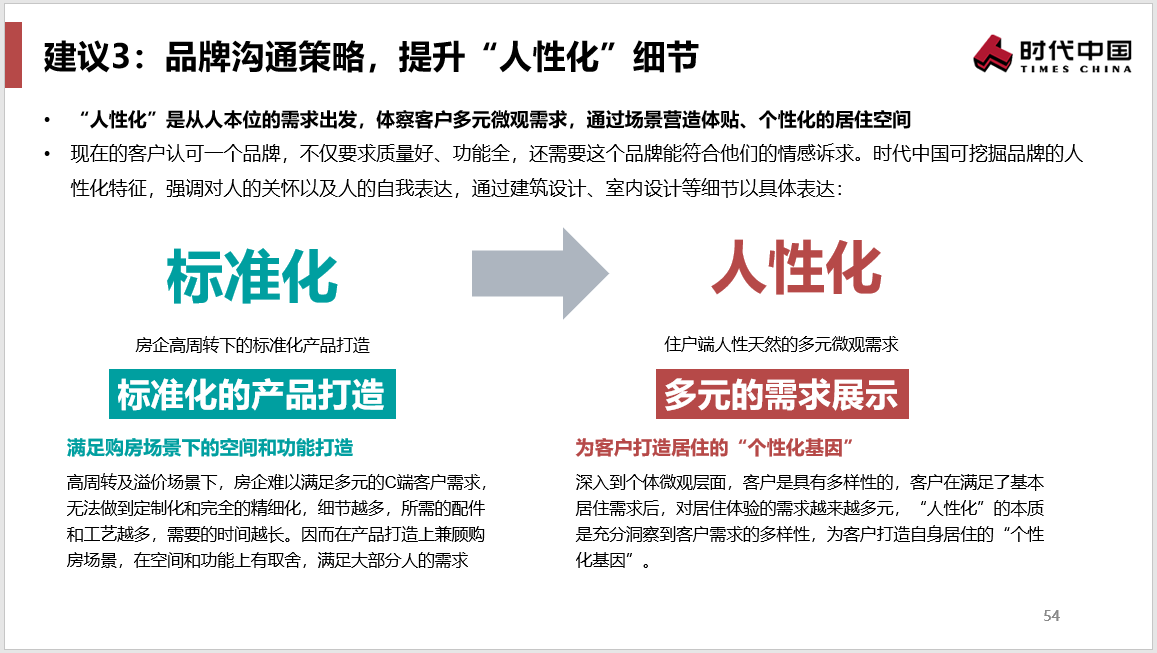
- Brand image perception research: Use brand image perception analysis tools to explore customers' core demands for brands in the real estate industry (such as humanization, cultural connotation, artistic tonality, etc.), and at the same time clarify Times China's advantages in "artistic tonality" and "cultural connotation", as well as its shortcomings in "humanization" and "functional services".
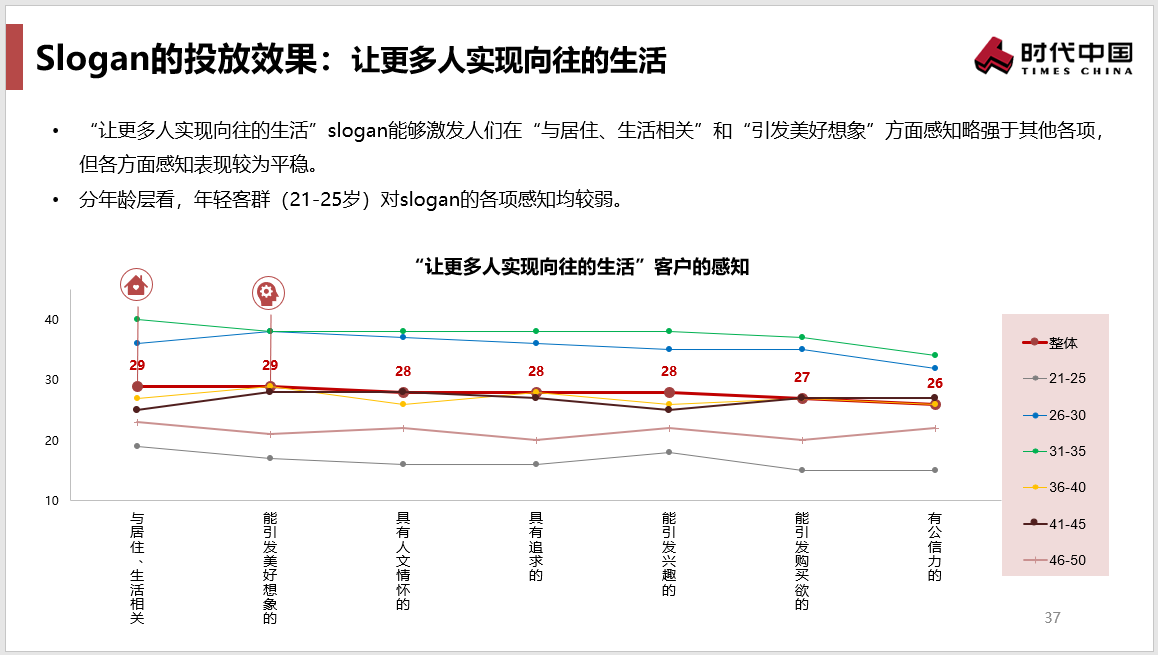
- Communication effect evaluation: Based on Times China’s Slogan (“Let more people realize the life they long for” and “Living Artist”) and typical activities (“Born for Longing” 20th Anniversary Ceremony, City Walk, etc.), the reach rate, conversion rate and effective reach effect were evaluated, and it was found that the communication intensity was insufficient, especially among young customers, the coverage was limited.
Phase II: Brand upgrading strategy framework
Based on the findings of the diagnosis, the four core strategic frameworks are built around the goals of narrowing the head gap, strengthening regional strengths and precision of the reachers:
- Industry-to-platform strategy: VancoHighland AlignmentTarget audiences, drawing on their branding and product-making experience, with the aim of promotingAdvantages extended against targetsTargets, consolidation of regional leadership; targeting, inter alia, ultra-sung, fusionCheckouts to fill gapsObject, fill the short board.
- Brand influence enhancement strategy: Aiming at the pain point of low awareness, focus on young customers (21-30 years old), and create personalized communication content through cross-border cooperation and new media matrix (Weibo, Douyin, Xiaohongshu, etc.); in response to the problem of low purchase conversion, optimize project location layout and refer to industry promotion models to improve cost-effectiveness and attractiveness.
- Brand communication strategy: emotional dimension, enhancedArtistic ModeCore positioning, extension.HumanizationImage outreach; functional level, with the view that the centre of the sale of the building is a breakthrough, to enhance functional experiences such as renovation design, property services, etc., and to create differentiated brand perception.
- Communication effect optimization strategy: Focusing on the core values of art and humanities, integrate products, operations and communication resources, optimize media mix, improve the reach efficiency of slogans and activities, focus on strengthening the communication coverage of young customer groups and second- and third-tier cities, and achieve accurate transmission of brand value.