

How did the Olazzi pair become the next community fresh retail pole?
Project background
Under the pressure of consumer market fluctuations and economic downturn, community fresh food retail companies generally face core pain points such as weak growth, unclear customer group positioning, and insufficient product cost-effectiveness. In order to achieve sustained growth in performance, accurately reach target customer groups, and optimize the product and supply chain system in a complex market environment, a leading company in the community fresh food field (hereinafter referred to as the "customer") urgently needs to find a way to break the situation by benchmarking against industry benchmarks.
As an affordable community supermarket originating from Germany, ALDI has achieved rapid expansion in the six years since it entered China (the number of stores will exceed 70 in 2025, and sales will reach 2 billion yuan in 2024). Its positioning of "good quality, low enough price" and its successful practice in the community fresh food scene have become an important benchmark for customers to learn from.
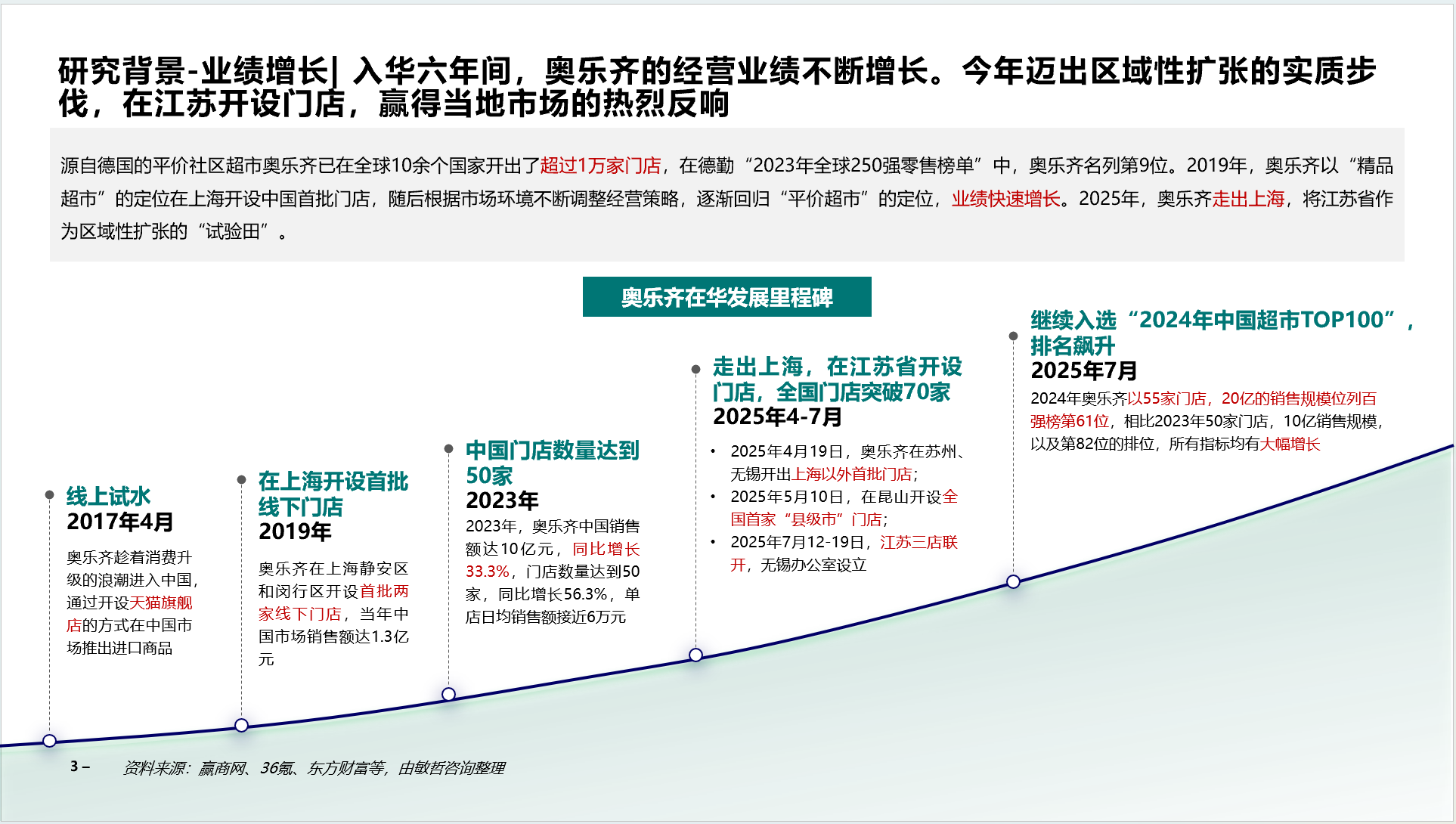
Phase 1: Precision and modelling
In response to the pains of “how to lock in the core and build a differentiated competition model”, the core policy framework was developed by deep decomposition of the Olympian business logic:
- It's a good crowd.: Focusing on the pan-middle class, silver-haired groups, sophisticated housewives, etc. in the Yangtze River Delta, and building a category matrix around their needs of "pursuing quality-price ratio and focusing on convenience" (such as small packaged goods suitable for small families, ready-to-eat foods suitable for young white-collar workers).
- Site Selection: anchoring small-size commercials around medium- and high-end communities and at core sites to ensure that daily consumption scenes are close to the target population and that they are made more convenient.
- He owns his own brand.: With private brands accounting for more than 50% (more than 90% of fresh food categories), through streamlined product selection (approximately 2,500 SKUs) and strict quality control, it balances "quality and low price" to form a differentiated label.
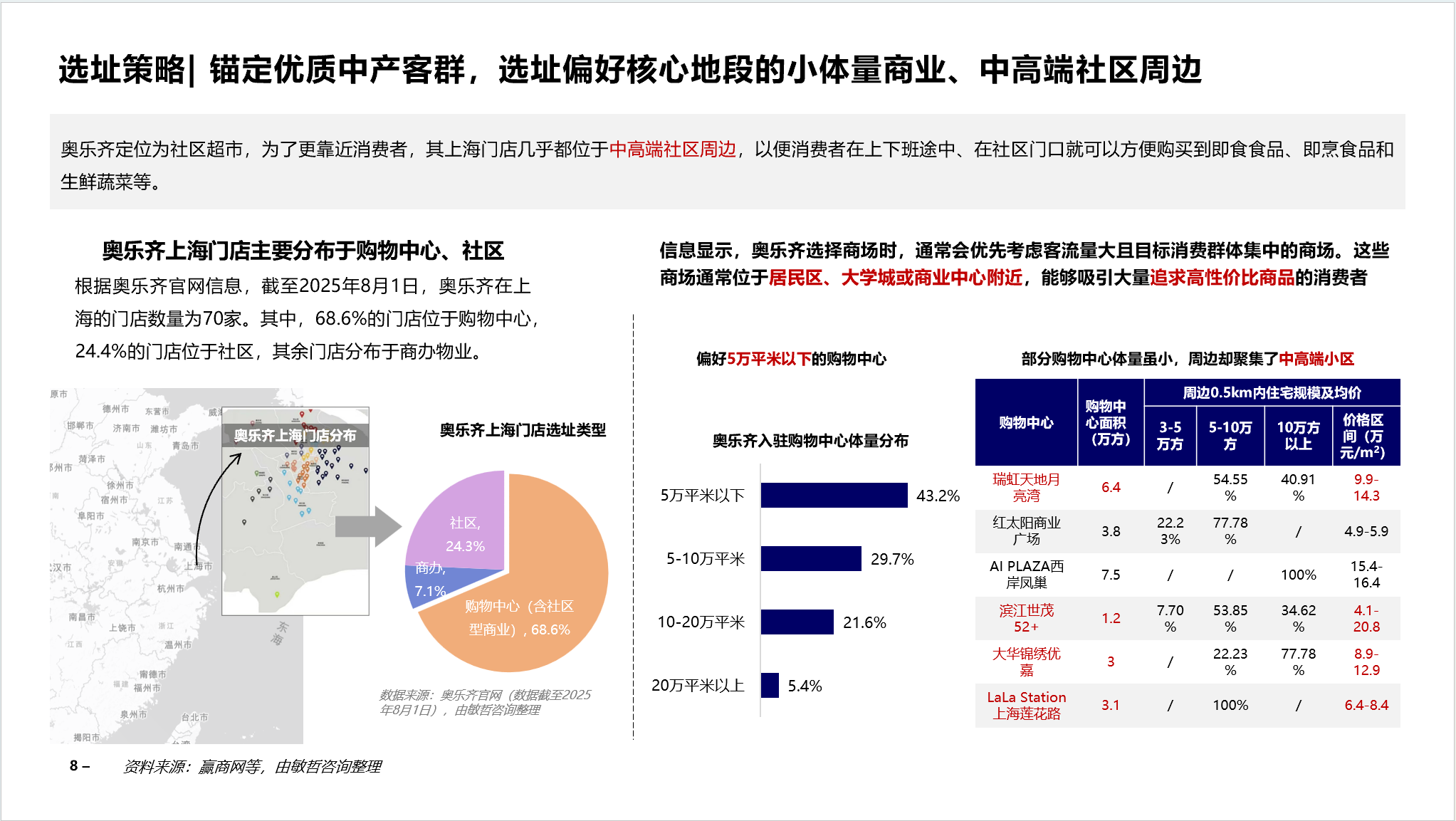
Phase 2: Supply chain and full-source optimization
In response to the painful point of “How to achieve growth through supply chain efficiency and full-source synergy”, the landing approach of Olympia was refined:
- Supply chain downloads: Lock annual sales of long-insurance goods and seasonal explosives, using the “native direct + lock price” model, to compress intermediate costs.
- Dynamic Selection Mechanism: By tracking the core data of competing products and combining it with consumer preference analysis, we have established a “hot product incubation + final elimination” system to focus on high-frequency rigid demand categories and improve product turnover efficiency.
- Full-source synergy.: With the goal of "online accounting for 35%-45%", we will open up the private domain of mini programs and public platforms such as Meituan and Ele.me, and combine it with offline store community scenarios to achieve a convenient experience of "online ordering, store pick-up/delivery", and strengthen user stickiness.
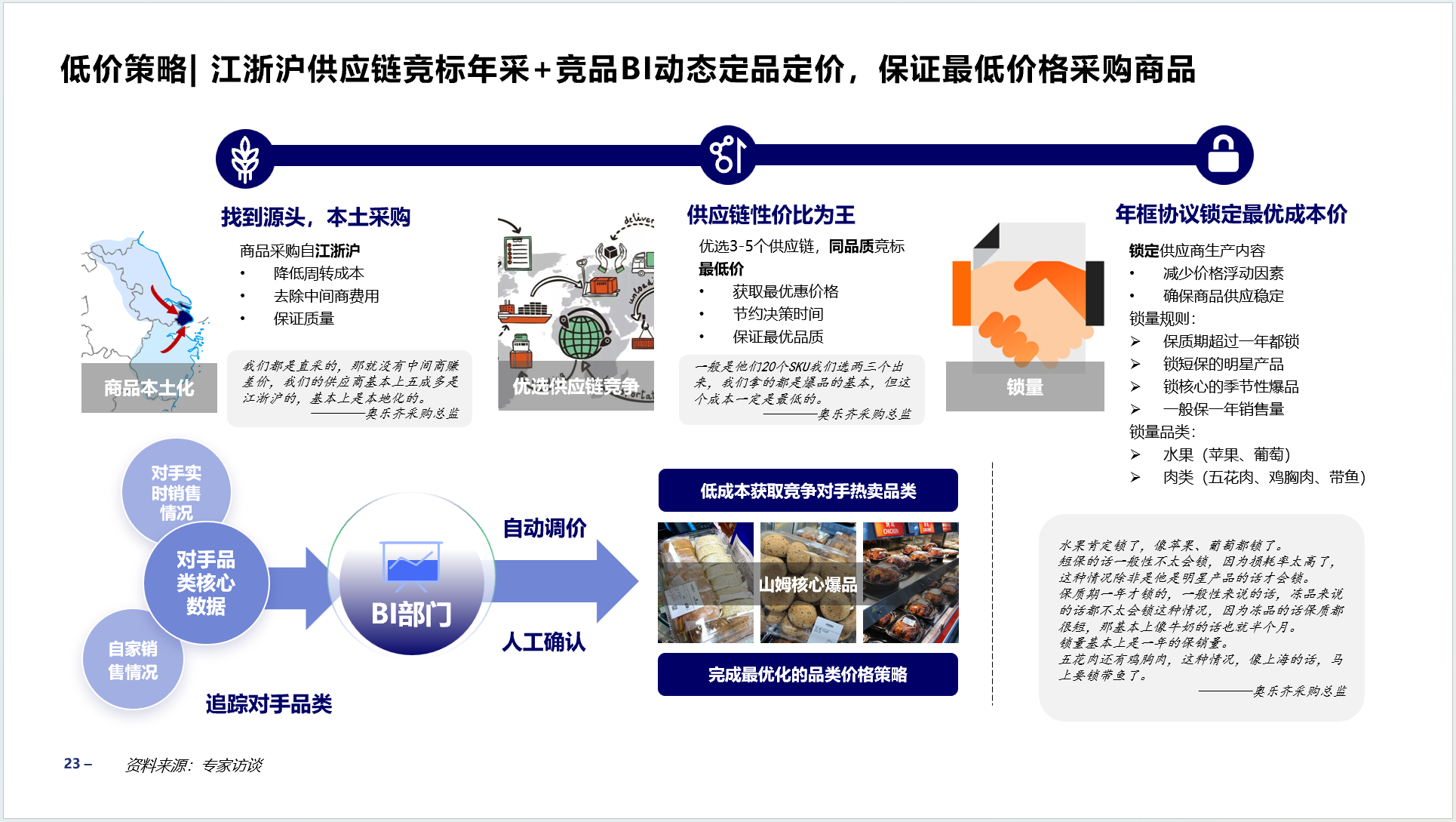
By benchmarking ALDI's positioning logic, supply chain strategy and operating model, it provides a practical reference framework for the community's fresh food company's continued growth, helping it achieve precise breakthroughs in a complex market environment.
