

Report on the market share and ranking of domestic regenerative polyesters with fibres dedicated to light sewing
The case shows the process of studying market size, competition patterns, market shares and rankings after a clear class, region and statistical calibration.
Section I: Overview of developments in the regenerative polyester (Pyrotechnic) fibres sector for the exclusive use of light sewing
Core product definitions and characteristics
Recycled polyester large bright sewing thread special fiber is an environmentally friendly fiber material developed for sewing thread production needs. It is made from recycled PET (such as plastic bottles, polyester waste) as raw materials and through chemical or physical regeneration processes. It has three core characteristics:
- Environmental Properties(a) Reducing the consumption of oil resources and waste pollution and meeting global certification standards for sustainable development, such as the GRS;
- Performance advantages: High gloss (special surface treatment improves reflectivity), high strength (breaking strength ≥4.5cN/dtex), strong wear resistance, uniform short fiber length (38-51mm), fineness (1.2-2D), and excellent spinnability;
- Function Extension: Some of the products have additional performances such as reflexibility, electrostatic resistance, and flame retardation, which meet high-end sewing line quality requirements.
Relationship with regenerative cleaning shorts
Recycled polyester staple fiber is a short fiber (length ranging from a few millimeters to tens of millimeters) processed from recycled polyester materials. It is divided into ordinary and differentiated types. Recycled polyester large glossy sewing thread special fiber belongs to the subdivision of differentiated recycled polyester staple fiber, focusing on optimizing the performance of sewing thread scenarios.
3. Typical production processes
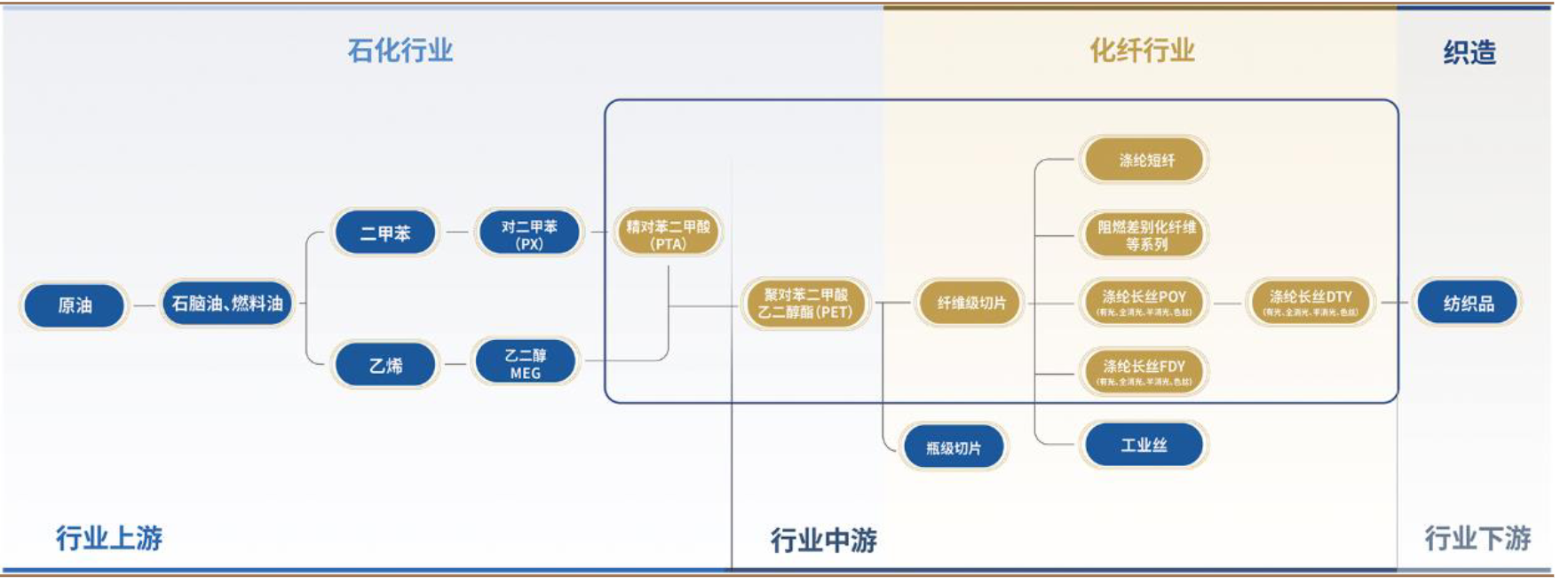
The production process includes high-temperature cleaning of waste polyester powder pieces, vacuum drum drying, adding whitening agent, barium sulfate and other additives, followed by screw melt extrusion, ring blow cooling, drafting, shaping, curling, cutting and other steps. Take Guangdong Yuanhui Environmental Protection as an example. It uses patented technology, has a product breaking strength of ≥6.2cN/dtex, and leads the industry in performance indicators.
Figure 1
Source: Institute of German Studies.
Section II: Status of developments in the regenerative polyester (Pyrotechnic) fibres sector for the exclusive use of light sewing
1. Cleaning of the overall capacity and pattern of short fibres
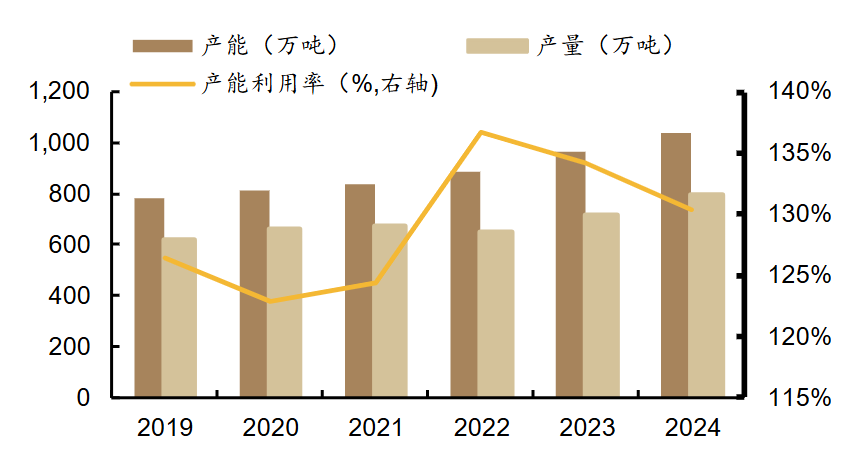
- The capacity continues to expand.: From 2019 to 2024, domestic polyester staple fiber production capacity will increase from 7.8 million tons to 10.36 million tons, with a compound annual growth rate of 5.8%, and the overcapacity pattern will gradually increase;
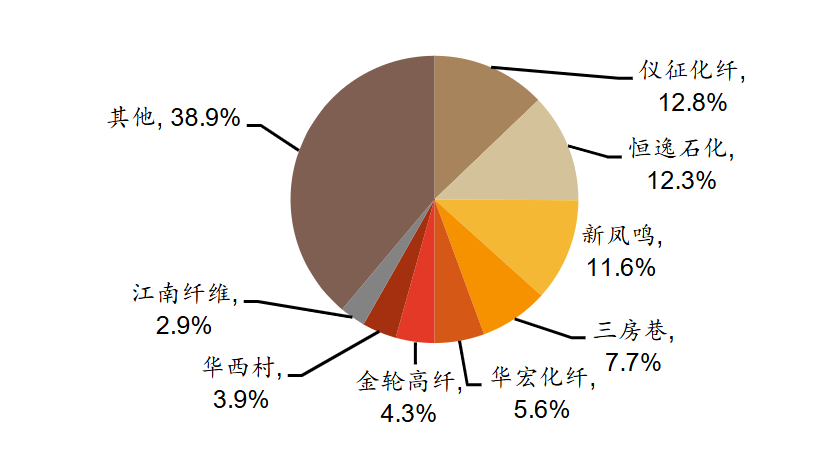
- High market fragmentation: The top three companies (Yizheng Chemical Fiber, Hengyi Petrochemical, and Xinfengming) account for about 36.7% of the total production capacity. The rest of the market is shared by many companies such as Jiangnan Fiber, Huaxi Village, and Sanfangxiang, and the industry concentration is low.
2. Demand and export performance
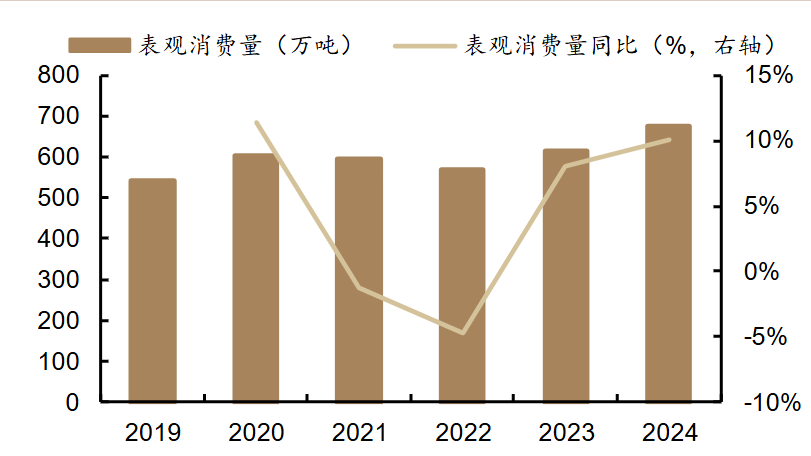
- Domestic demand rehabilitation: 6.73 million tons in 2024, an increase of 10.0 per cent over the same year, benefiting from a rebound in domestic and foreign textile demand;
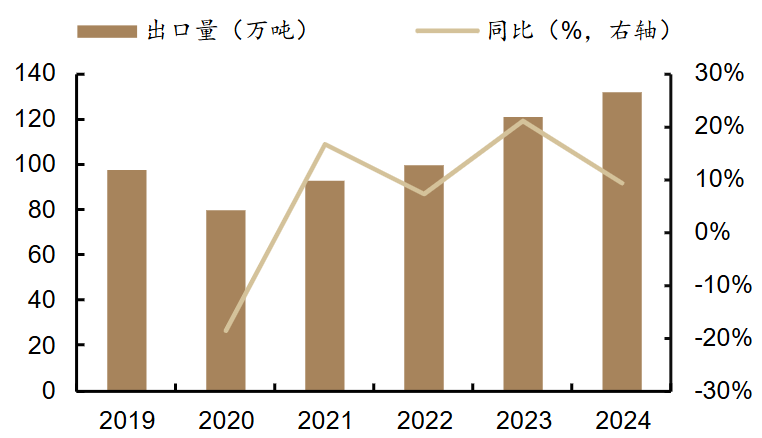
- Steady growth in exports: 13.2 million tons of exports in 2024, representing an increase of 9.4 per cent over the same period, and the demand for steroids in overseas markets is more resilient.
3. Prices and profitability trends
In 2024, polyester staple fiber prices first fell and then stabilized. In the first half of the year, the industry suffered losses due to off-season demand and insufficient raw material support. After June, companies implemented a policy of supporting processing fees, and profits gradually recovered. It is expected that in the future, as production capacity expansion slows down and demand recovers, industry profitability will continue to rise.
4. Regenerative clean-up of the development of short fibres
- Policy and consumption-driven: The tightening of global environmental protection policies (such as the EU Circular Economy Plan and China’s “Double Carbon” goal) and the improvement of consumers’ environmental awareness have promoted the penetration of recycled polyester staple fiber in sewing threads, automotive interiors and other fields;
- Market size growth: China’s recycled polyester staple fiber market size will be 21.53 billion yuan in 2023, a year-on-year increase of 12%. Demand will fluctuate temporarily due to macroeconomic fluctuations in 2020, and will return to the growth track with terminal recovery after 2023;
- Fragmentation of competition patterns: Leading companies focus on high-quality, high value-added products, while small-scale companies are gradually being restricted due to backward technology and insufficient production capacity. The industry is showing a trend of “leading from the head and eliminating from the tail”.
Figure 2
Source: Wind, Yinfu, Bagawa Institute
Figure 3
Source: Wind, Heifeng Uegawa, Debon Institute (as of the end of 2024)
Figure 4 Steady rehabilitation of domestic demand for steroids
Source: Wind, Yinfu, Bagawa Institute
Figure 5
Source: General Customs Administration, Heifeng Uegawa, Institute of German Studies
Section III: Size of the market for regenerative polyesters with specialized fibres for light sewing
1. Base of the global and domestic regenerative blubber market
The global recycled polyester fiber (including filament and short fiber) market size will be approximately US$15 billion in 2023. China accounts for more than 60% of global production capacity and is a core producer. Recycled polyester staple fiber is mainly used in clothing, home textiles, nonwovens and industrial fields (including sewing thread), with an expected annual growth rate of 8-12% from 2024 to 2030.
Market potential for specialized regenerative fibres for sewing lines
- Demand measurement:China's sewing thread industry consumes 500,000-700,000 tons of polyester staple fiber annually (including virgin and recycled). If the recycling penetration rate increases from the current 10% to 20% in 2025, the demand for special recycled fiber can reach 100,000-140,000 tons/year. Calculated at a unit price of 12,000-15,000 yuan/ton, the market size is about 1.2-2.1 billion yuan/year;
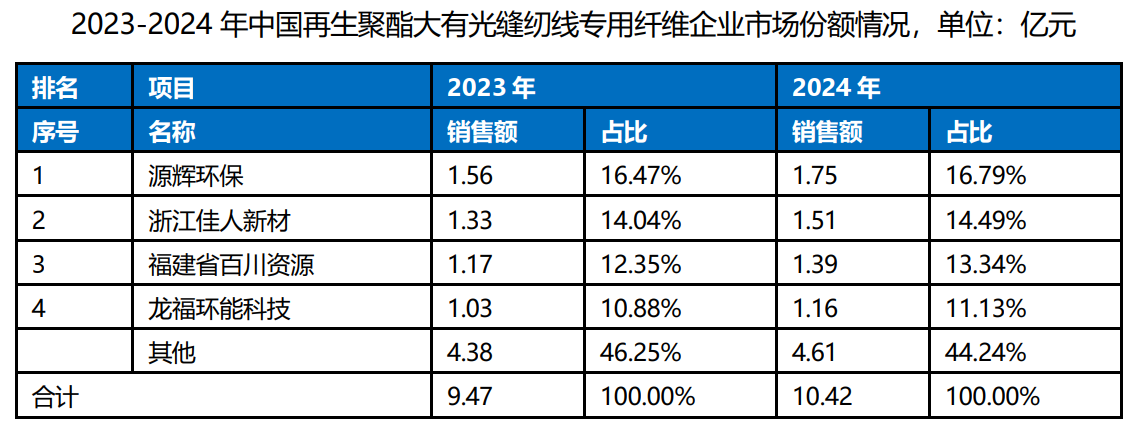
Disaggregated to a wide variety of fine:2023 The market size of China's recycled polyester staple fiber special fiber for sewing threads was 947 million yuan in 2024, and will grow to 1.042 billion yuan in 2024. The calculation logic is "China's recycled polyester staple fiber market size × sewing thread proportion (11%) × Dayo's proportion (40%)".
Data source: Integrated information, statistical agencies, Mindwise Consulting Research Department
