
How does the Cosmetic OEM Industry Competition and Pay Study support organizational and marketing decisions with market data?
In recent years, competition in the cosmetics industry has continued to intensify, and brands have continuously increased their requirements for product innovation, efficacy verification, supply chain response, and cost control. For cosmetics OEM, R&D and supply chain companies, competition is no longer just about production capacity and price, but a comprehensive competition for customer resources, R&D capabilities, organizational efficiency and talent structure.
Against this background, a cosmetics-related company hopes to systematically understand the operating performance of competing products, customer structure, organizational configuration and job salary levels in the cosmetics industry in South China, so as to provide reference for subsequent business planning, organizational optimization and talent strategies. This project helps companies establish a more complete industry benchmarking perspective through multi-source market data, expert interviews, job salary benchmarking and organizational structure analysis.

01 From the point of view of competition to the way in which industry competes.
In the competitive product research, we sorted out the revenue scale, growth performance, customer structure and business focus of representative cosmetics supply chain companies in South China. We found that corporate growth is affected by multiple factors such as customer cooperation, category layout, overseas business, R&D investment and organizational efficiency. It is necessary to judge the strength of competing products from multiple dimensions.
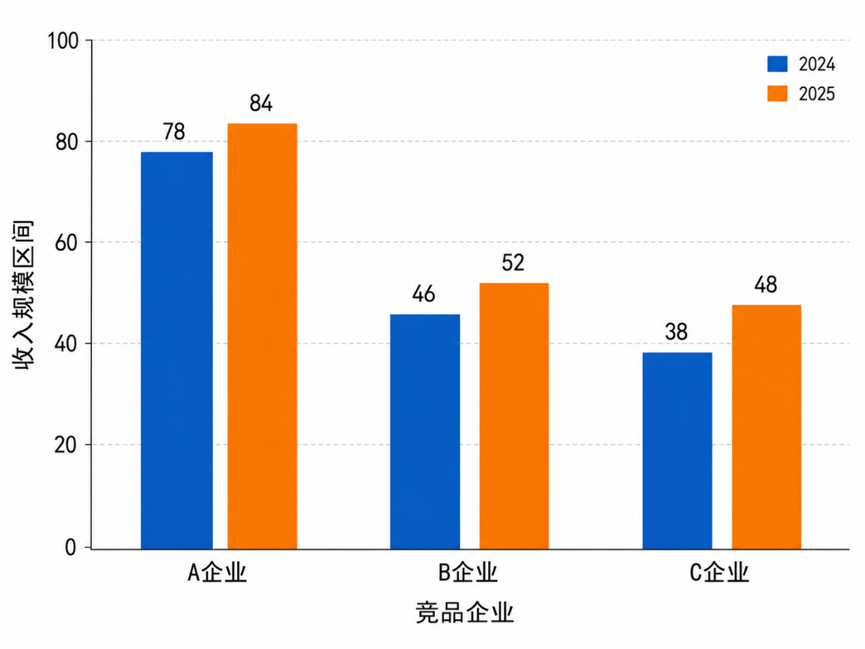
Scale of income of representative enterprises versus growth performance
02 Dismantling of client structures and understanding of sources of growth
In the cosmetics industry, customer structure directly affects the stability of corporate income and the quality of growth. By sorting out the customer types of representative companies, we can see that the core customers of cosmetics supply chain companies usually cover international daily chemical brands, domestic skin care brands, cosmeceutical brands, washing and care brands, and functional skin care brands.
The business value corresponding to different customer types is not the same. International brands can usually bring relatively stable order scales and higher quality management requirements; domestic brands place more emphasis on new product speed, response to hot-selling products, and flexible supply capabilities; cosmeceutical and functional skin care brands pay more attention to research and development, efficacy verification, and compliance capabilities; wash care and personal care customers often have higher requirements for production efficiency, cost control, and large-scale delivery.
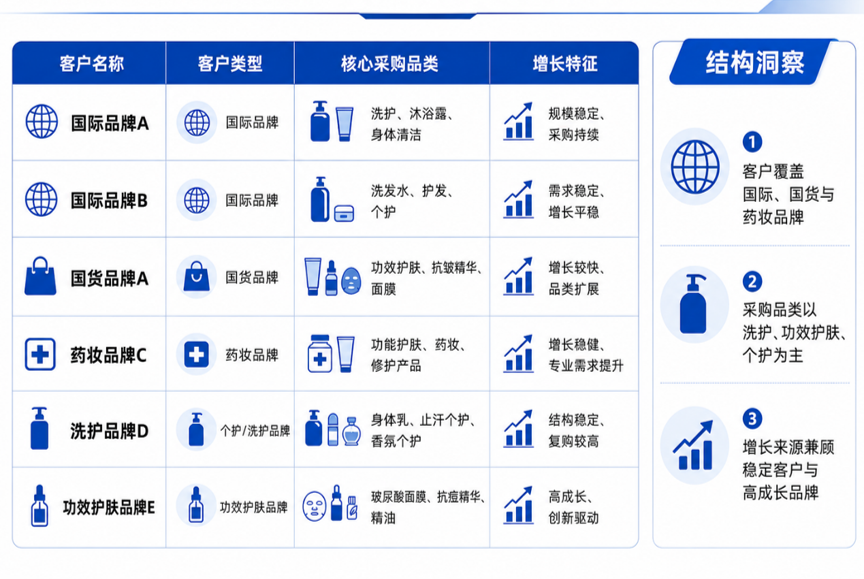
Client structure reflects the quality of enterprise growth
03 Organization configuration determines enterprise capacity
In addition to sales and customer data, organizational structure is also an important dimension in judging a company's competitiveness. Business growth in the cosmetics industry ultimately requires the joint support of organizational capabilities such as sales, R&D, production, operations, quality management and customer service.
From the survey results, different companies show obvious differences in organizational configuration. Some companies are more sales-driven, with strong customer development and regional coverage capabilities; some companies are more R&D-driven, with more sufficient R&D, process and technical personnel to better support formula development, efficacy verification and large customer customization needs.
Behind the organizational structure is the strategic choice of the enterprise. Companies that are more sales-driven tend to pay more attention to customer development, channel expansion and order acquisition; companies that are more R&D-driven tend to pay more attention to formulation capabilities, technology accumulation and product innovation. Understanding the organizational structure of competing products can help companies determine whether they have shortcomings in sales, R&D, quality and supply chain configuration.
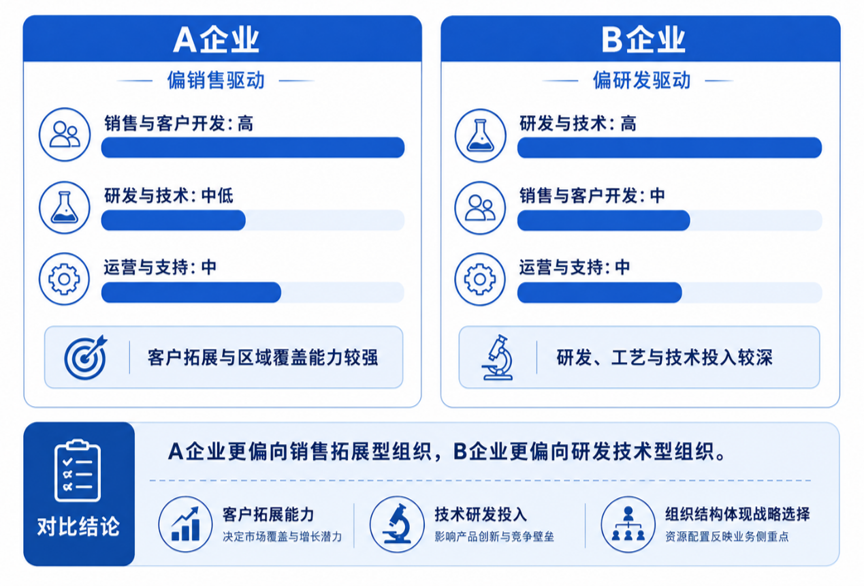
Organizational structure differences reflect a focus on enterprise capacity
04 Pay data support talent strategy
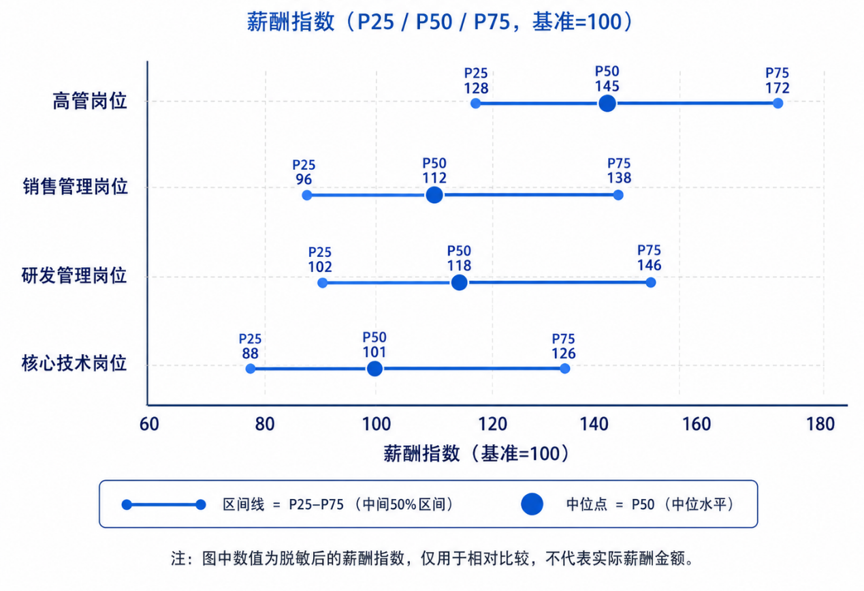
In the increasingly fierce competition for talents, salary levels directly affect the company's ability to attract, retain and motivate talents. This survey covers multiple job levels in the cosmetics industry, including senior management, sales, R&D, marketing, supply chain and functional management, and is distinguished according to annual basic cash income, annual fixed cash income, total annual cash income and annual total compensation.
There are also obvious hierarchical differences between different positions. Sales positions tend to rely more on performance incentives, R&D positions pay more attention to professional abilities and project experience, and management positions pay more attention to strategic judgment, team management, and cross-department collaboration capabilities. This kind of information can help companies calibrate their internal ranking systems to avoid salary deviations for key positions from the market.